
Banks in Antigua & Barbuda: ACB Caribbean, ECAB, CIBC & Your Complete 2026 Guide
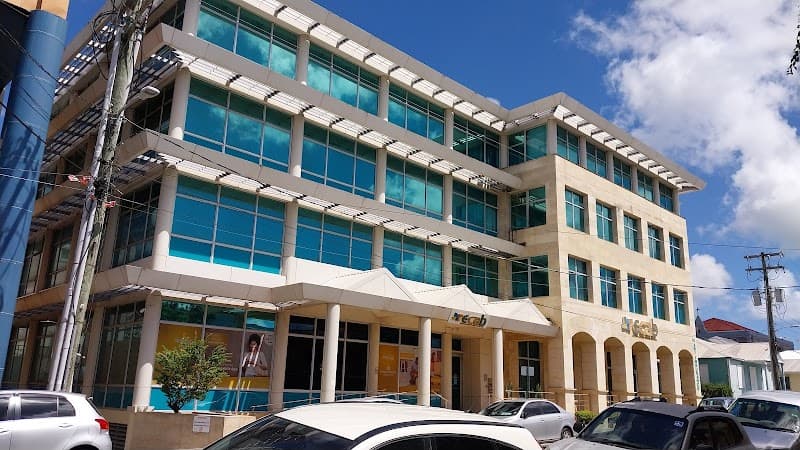
Antigua's banking sector changed forever in 2021. Here's your practical 2026 guide to ACB Caribbean, ECAB, CIBC, opening hours, ATMs, and how to open an account.
Banks in Antigua & Barbuda: ACB Caribbean, ECAB, CIBC & Your Complete 2026 Guide
TL;DR: Antigua & Barbuda's banking scene changed dramatically in 2021 when both RBC and Scotiabank exited the island. Today, five main banks serve residents, expats, and businesses: ACB Caribbean, ECAB, CIBC Caribbean, Caribbean Union Bank, and Global Bank of Commerce. This guide covers who they are, where their branches and ATMs are, what hours they keep, and exactly what documents you need to open an account.
Opening a bank account in Antigua should be simple. But if you've just landed on the island and started Googling "ACB Caribbean" or "banks in Antigua," you've probably hit a wall of offshore investment guides written for passport buyers — not for the person who just moved to St. John's and needs to set up a local account before their first paycheck arrives.
This guide is different. It's written for residents, new expats, business owners, and long-stay visitors who need practical, on-the-ground answers. Which banks have branches near you? What are the actual opening hours? Do ATMs accept foreign cards? Can you open an account without being a citizen?
Antigua's banking sector is entirely locally and regionally controlled as of 2021, a milestone for the island. Two major Canadian banks exited that year, and local institutions stepped up to fill the gap. Understanding who's who now is the first step to banking with confidence on this beautiful twin-island nation.
What Banks Are Currently Operating in Antigua & Barbuda?
There are five primary commercial banks serving everyday residents and businesses in Antigua & Barbuda in 2026: ACB Caribbean, Eastern Caribbean Amalgamated Bank (ECAB), CIBC Caribbean, Caribbean Union Bank (CUB), and Global Bank of Commerce (GBC). All onshore banks are regulated by the Eastern Caribbean Central Bank (ECCB).
The Eastern Caribbean Central Bank (ECCB) regulates local (onshore) financial institutions in Antigua and Barbuda, while offshore banks are regulated by the Financial Services Regulatory Commission (FSRC).
Caribbean Union Bank, ACB Caribbean, Global Bank of Commerce, and Eastern Caribbean Amalgamated Bank are all members of the Caribbean Association of Banks. CIBC Caribbean is not a CAB member, but its operations in Antigua are still licensed by the ECCB.
Two banks you may remember are no longer here. Two international banks, Scotiabank and Royal Bank of Canada, were previously present in Antigua and Barbuda. However, in 2021, Scotiabank completed the sale of its operations to Eastern Caribbean Amalgamated Bank. RBC sold to ACB Caribbean in the same year. More on that shortly.
The currency is the Eastern Caribbean Dollar (XCD). The main currency of Antigua and Barbuda is the Eastern Caribbean dollar. It is pegged to the US dollar at a ratio of 2.7:1, so EC$1 always equals $0.37. By default, accounts are opened in Eastern Caribbean dollars. All major banks have foreign currency accounts in US dollars.
ACB Caribbean: Antigua's Largest Indigenous Bank
ACB Caribbean was incorporated on October 20, 1955, as The Antigua Co-operative Bank Limited, when it registered a share capital of EC$100,000 and became the country's first indigenous bank and public company. The bank's operations started on January 3, 1956, at the former Chelsea Building on Newgate Street in St. John's.
That makes ACB Caribbean over 70 years old, older than Antiguan independence itself.
Antigua Commercial Bank Ltd., now trading as ACB Caribbean as at March 2021, is the largest indigenous commercial bank in Antigua & Barbuda with an asset base of over two billion Eastern Caribbean Dollars. The rebrand happened alongside a major expansion: effective 1 April 2021, the Royal Bank of Canada's (RBC) operations in Antigua and Barbuda ceased, having been acquired by a consortium of national banks, with ACB Caribbean being the Antigua arm of that consortium.
ACB Caribbean has acquired the operations of Royal Bank of Canada in Antigua & Barbuda and in Grenada, expanding out of Antigua & Barbuda where it has operated successfully for 65 years. This means ACB absorbed the former RBC branches, giving it a significantly larger footprint overnight.
ACB Caribbean Branches in St. John's:
ACB Caribbean has branches at Thames and St. Mary's Streets (Head Office), the ACB Village Walk Branch at Village Walk Commercial Centre on Friars Hill Road, the ACB Financial Centre at High & Temple Streets, and a branch at High & Market Streets. ATM locations span throughout St. John's including Coolidge, Perry Bay, and All Saints Road.
ACB also has a presence in Barbuda. There is an agency location near the old airport there. There is a $500 EC daily limit on foreign cards at the Barbuda location, so visitors to Barbuda are advised to bring cash for their stay.
Hours: Monday to Thursday: 8:00 am to 2:00 pm. Friday: 8:00 am to 3:00 pm.
In late 2025, ACB Caribbean began a Smart ATM rollout across the island. ACB Caribbean outlined an aggressive timeline for expanding the Smart ATM network, though customers should note that during the trial phase, the new ATMs had restricted capabilities, with deposits, transfers, and other advanced transactions not yet available, and only ACB Caribbean-issued cards accepted at these machines during testing. That situation is expected to improve as the rollout matures in 2026.
ACB is also pioneering regional partnerships. The ACB Caribbean Group signed an agreement with the Barbados-based CARICOM Development Fund (CDF) aimed at enhancing financing for small and medium-sized enterprises (SMEs) engaged in renewable energy and energy efficiency projects across Antigua and Barbuda and Grenada.
You can browse the ACB Caribbean listing on AntiguaSearch for their Friars Hill Road location, or find the ACB Caribbean High Street branch for the city-centre location.
What Happened to Scotiabank in Antigua?
Scotiabank left Antigua on September 1, 2021. Its operations were fully acquired by ECAB (Eastern Caribbean Amalgamated Bank). All former Scotiabank branches, accounts, cards, and services transitioned to ECAB. If you were a Scotiabank customer, you are now an ECAB customer.
Scotiabank completed the previously announced sale of its banking operations in Antigua and Barbuda to the Eastern Caribbean Amalgamated Bank Limited (ECAB). ECAB is a full-service commercial bank located in Antigua and Barbuda that is committed to growing its business and providing high quality products and services to all stakeholders, offering personal and commercial banking products and services including deposits, loans, cards, foreign exchange and other services.
The Eastern Caribbean Central Bank advised that effective 1 September 2021, the Bank of Nova Scotia (BNS) operations in Antigua and Barbuda ceased and ECAB's operations came to include the previous BNS branches.
The transition wasn't entirely smooth. Long lines at ECAB branches and ATMs became a recurring theme following the acquisition, and a growing number of customers expressed disappointment, frustration, and even anger with the provision of services. That said, service delivery has improved over time as the integration matured.
ECAB itself was founded in 2010 and had already built a strong local reputation before the acquisition. Eastern Caribbean Amalgamated Bank Ltd. is a reputable financial institution established in 2010 in Antigua and Barbuda. ECAB offers an extensive list of banking services, including personal and business accounts, loans, mortgages, credit cards, and investment options.
ECAB has multiple locations across St. John's, including branches on Redcliffe Street and at the Woods Centre on Friars Hill Road. There is also an ECAB location on Dockyard Drive, convenient for those based near English Harbour and the St. Paul's area. You can find the ECAB listing on AntiguaSearch for full location details.
CIBC Caribbean: The International Option
CIBC Caribbean is the regional subsidiary of the Canadian Imperial Bank of Commerce. The bank was founded in 2002 as FirstCaribbean International Bank through the merger of the Caribbean operations of Barclays Bank and CIBC. The name was then changed to CIBC Caribbean in January 2024.
Unlike ACB and ECAB, CIBC Caribbean is not locally owned. But it brings international banking infrastructure, which appeals to expats, multinational businesses, and private wealth clients. CIBC Caribbean is one of the largest regionally listed financial services institutions in the English-speaking Caribbean, with US$13 billion in assets and market capitalization of US$1.7 billion, providing banking services through approximately 2,700 employees in 41 branches and offices across 10 countries.
In Antigua specifically, CIBC Caribbean operates two branches and nine ATMs (instant tellers). Three of these ATMs are located at different commercial businesses and one is available outside the Old Parham Road location as a drive-thru facility. The Old Parham Road branch is in the Cassada Gardens area of St. John's.
Hours: Monday to Thursday: 8:00 am to 2:00 pm. Friday: 8:00 am to 3:00 pm.
CIBC Caribbean offers personal and business banking, credit cards, loans, mortgages, and private wealth management. For expats from Canada, the UK, or Europe who are accustomed to internationally recognised bank brands, CIBC Caribbean can offer a measure of familiarity. You can view the CIBC FirstCaribbean International Bank listing on AntiguaSearch for contact and location details.
Global Bank of Commerce and Caribbean Union Bank
Global Bank of Commerce (GBC) is Antigua's oldest licensed international bank, founded in 1983. Caribbean Union Bank (CUB) is a newer domestic commercial bank founded in 2005. Both cater to different client profiles but are important parts of the island's financial ecosystem.
Global Bank of Commerce Ltd. is a Caribbean managed and operated international bank, offering attractive financial products to its regional and international customers since 1983. It was the first bank to be licensed in Antigua and Barbuda under its International Business Corporations Act, 1982, and has the distinction of being the grandfather of international financial services in the jurisdiction's Financial Centre.
GBC focuses heavily on international clients, offshore accounts, and wealth management. Accounts at Global Bank of Commerce can be opened in British pounds sterling, Canadian dollars, or euros, in addition to US and EC dollars. This is a major differentiator for international residents and investors.
GBC maintains a solid capital base and undergoes annual third-party financial audits as well as annual third-party AML/CTF audits. It is a member of SWIFT and enjoys correspondent banking services with significant banking partners in North America and Europe.
Caribbean Union Bank takes a more retail-focused, resident-first approach. Caribbean Union Bank Ltd. (CUB) was founded in 2005. With its customer-centric approach, CUB offers a range of financial products such as savings and checking accounts, loans, credit cards, and foreign exchange services, focusing on providing personalized attention and innovative solutions.
Are you a business owner in financial services? There are over 1,200 people browsing the Finance & Legal category on AntiguaSearch every month. Add or claim your listing to connect with that audience directly.
Find the Global Bank of Commerce listing and the Caribbean Union Bank listing on AntiguaSearch for location details.
How Do You Open a Bank Account in Antigua as an Expat or New Resident?
Opening a bank account in Antigua as an expat or new resident is straightforward if you have the right documents. You'll need your passport, a second form of ID, proof of your local address, and proof of income or funds. Some banks also require evidence of a three-year banking history.
Expats living in Antigua and Barbuda can open bank accounts in Antigua and Barbuda, requiring national identification and proof of address. Legal entities (corporations) registered in Antigua and Barbuda can open corporate bank accounts by submitting incorporation and director identification documents.
Here is the standard document checklist most banks request:
In most cases, opening a bank account is simple. You must fill out an application form and submit it accompanied by: your passport, an internal identity document from your native country (driving license or National Identity Card), proof of your residence (utility bill or rent agreement), and documentation proving you have a positive credit history.
Some banks go a step further. Banks in Antigua typically require a minimum three-year banking history demonstrated through account statements or equivalent documentation. Alternatively, credit references or a documented letter from a business associate with whom you have a minimum three-year relationship may suffice. The bank will want to know the source of your funds.
The process is appointment-based. You should schedule an appointment by contacting the bank in advance. Research the different banks in Antigua and Barbuda and choose one that offers services that suit your needs, as some banks may require higher minimum balances or charge higher fees than expats are used to in their home countries.
For ongoing account maintenance, current account maintenance fees typically run $7 to $10 per month.
Most major banks offer online and mobile banking. ACB Caribbean's app is particularly popular with locals. CIBC Caribbean also provides robust digital banking for international clients. Most banking in Antigua happens in English, which makes the process accessible for visitors and expats from English-speaking countries.
ATM Access, Banking Hours, and Tips for Visitors
Tourists and short-term visitors to Antigua don't usually need to open a local account. But knowing where to find a working ATM — and which cards are accepted — can save you real hassle during your stay.
General Banking Hours:
Generally, banks are open from Monday to Thursday, from 8 am to 2 pm, and on Fridays, from 8 am to 4 pm. Some banks may have extended hours, and some branches may be open on Saturdays. Do not plan last-minute banking runs on a Saturday afternoon or Sunday: branches will be closed.
ATM Tips:
Most ATMs in St. John's accept international Visa and Mastercard debit and credit cards. ACB Caribbean has ATMs spread across St. John's, including at the Village Walk branch on Friars Hill Road and near High Street. CIBC Caribbean operates nine ATMs in Antigua including a convenient drive-thru unit on Old Parham Road. ECAB has ATMs at its High Street and Woods Centre branches.
If you're heading to Barbuda, plan ahead. ACB has ATMs near the old airport, but there is a $500 EC daily withdrawal limit on foreign cards. Visitors to Barbuda are advised to bring cash for their stay, as banking options are limited.
Currency:
The local currency is the Eastern Caribbean Dollar, which is tied to the US Dollar. Most businesses also accept US Dollars. The fixed peg of EC$2.70 to US$1.00 means your exchange rate is predictable every time. Euros and British pounds are less commonly accepted in everyday shops, so exchange or withdraw EC dollars or US dollars on arrival.
All major businesses in St. John's, from Heritage Quay duty-free shops to restaurants near English Harbour, accept credit cards at point of sale. But having EC cash is essential for local markets, taxis, and smaller businesses throughout the island's parishes.
For the full picture of financial services and businesses across St. John's, browse the St. John's parish directory on AntiguaSearch — the island's capital and banking hub.
Conclusion
Antigua & Barbuda's banking sector is now entirely in local and regional hands for the first time in decades. That's a meaningful shift, and it means every bank you walk into on the island has skin in the game here.
Here are the three things to take away from this guide:
- ACB Caribbean is your anchor. It's the island's oldest and largest indigenous bank, with the widest branch and ATM network across St. John's and a presence in Barbuda.
- ECAB is the successor to Scotiabank. If you're a former Scotiabank customer, your account is now with ECAB. The integration improved significantly since 2022.
- Documents matter. Whether you're a new resident or long-stay expat, prepare your passport, second ID, proof of address, and bank statements before scheduling your account opening appointment.
Ready to explore all the financial services options on the island? Browse the complete Finance & Legal directory on AntiguaSearch for banks, accounting firms, insurance providers, and legal professionals across Antigua & Barbuda. If your bank or financial services business isn't listed yet, add your listing here and connect with over 1,200 monthly visitors actively looking for financial services.
Frequently Asked Questions
Is ACB Caribbean the same as Antigua Commercial Bank?
Yes. Antigua Commercial Bank Ltd., now trading as ACB Caribbean as at March 2021, is the largest indigenous commercial bank in Antigua & Barbuda with an asset base of over two billion Eastern Caribbean Dollars. The rebrand to ACB Caribbean happened in March 2021 alongside a major visual identity refresh and the acquisition of RBC's local operations. The bank itself has been operating since 1955.
What happened to Scotiabank and RBC in Antigua?
Both Canadian banks exited Antigua in 2021. Effective 1 April 2021, the Royal Bank of Canada's operations in Antigua and Barbuda ceased, having been acquired by a consortium of national banks, with ACB Caribbean acquiring the RBC Antigua operations. Scotiabank completed the sale of its banking operations in Antigua and Barbuda to ECAB on September 1, 2021. Former customers of both banks were automatically transitioned to their respective acquiring bank.
What documents do I need to open a bank account in Antigua?
You will need your passport, an internal identity document from your native country (such as a driving license or National Identity Card), proof of your residence (such as a utility bill or rent agreement), and documentation proving a positive credit history. Some banks, particularly those with international client bases, may also ask for three years of bank statements or a letter of reference from your existing bank.
Can tourists use ATMs in Antigua with foreign cards?
Yes, most ATMs in St. John's accept international Visa and Mastercard debit and credit cards. In Barbuda, however, there is a $500 EC daily limit on foreign cards. Visitors to Barbuda are advised to bring cash for their stay, although ATM options have improved in recent years. In St. John's itself, ATMs are widely available at ACB Caribbean, ECAB, and CIBC Caribbean locations.
What currency does Antigua use, and is it pegged to the US dollar?
Controlled by the Eastern Caribbean Central Bank (ECCB), the Eastern Caribbean Dollar (XCD or EC), pegged at a rate of EC$2.70 to $1 USD, is central to Antigua and Barbuda's banking system as the country's official currency. It is the primary currency for both personal and commercial transactions. The peg has been fixed since 1976, making it one of the most stable currencies in the region. Most businesses in tourist areas also accept US dollars directly.