
Getting Around Antigua Without a Car: Transport Board Guide 2026
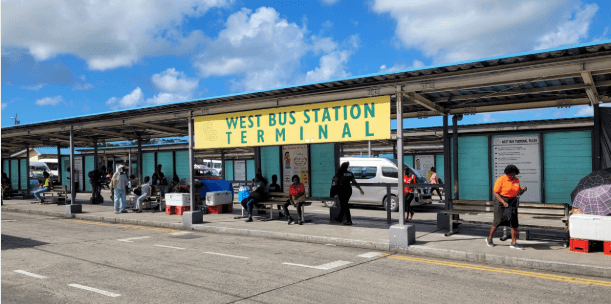
Antigua's public bus network is affordable, authentic, and surprisingly useful for tourists. Privately operated minivans run from two stations in St. John's to beaches, villages, and landmarks across the island. Fares range from EC$2.25 to EC$5.00. Route 22 covers the west-coast beaches, Route 17 reaches English Harbour, and Route 50 heads to Dickenson Bay.
TL;DR: Antigua's public bus network is affordable, authentic, and surprisingly useful for tourists. Privately operated minivans run from two stations in St. John's to beaches, villages, and landmarks across the island. Fares range from EC$2.25 to EC$5.00. Route 22 covers the west-coast beaches, Route 17 reaches English Harbour, and Route 50 heads to Dickenson Bay. Buses leave when full, not on a fixed clock, so plan extra time.
Antigua is a small island. You can drive from one end to the other in under 45 minutes. But you do not need a car to explore it. The island's public transport network, overseen by the Antigua and Barbuda Transport Board, puts beaches, landmarks, and neighbourhoods within reach for a handful of Eastern Caribbean dollars.
Most travel blogs skip straight to rental cars. This guide does not. Whether you are a budget traveller, a cruise passenger with a few hours ashore, or an expat living car-free, this is the definitive breakdown of how Antigua's buses actually work in 2026. You will learn which routes go where, what to pay, which station to use, and when it makes sense to flag a taxi instead.
Antigua has 365 beaches, one for every day of the year. The bus system will not get you to all of them. But it will get you to some of the best ones for less than the price of a coffee back home.
How Does Antigua's Bus System Actually Work?
Antigua runs a network of privately owned minivans on government-regulated routes. Buses do not follow a fixed timetable. They leave the terminus when the driver decides there are enough passengers on board, then run back and forth along the route throughout the day.
This is the single most important thing to understand. There is no app that shows the next departure in real time. You go to the station, find your route number, and wait. On busy routes like Route 22, that wait is usually 15 to 20 minutes. On quieter routes it could be longer.
The vans are compact, typically seating 12 to 15 people. They are privately owned but carry yellow number plates marked "BUS," making them easy to spot on the road. Most have their route number posted in the front window. Drivers are generally friendly and will confirm your destination if you ask.
Buses operate from around 5:30 AM to 6:00 PM daily. After dark, service drops off sharply on all but the most popular routes, so plan your return journeys accordingly.
You can also flag a bus down anywhere along its route by waving from the roadside. You do not need to stand at a designated stop, though official stops are marked with simple red-and-white signs.
Where Do You Catch the Bus in St. John's?
All routes radiate out from St. John's. The capital has two bus stations, and knowing which one you need will save you a wasted walk across town.
West Bus Station sits on Market Street, right next to the Central Market. This is the station most tourists need. West-bound and south-bound routes depart from here, including the routes to Jolly Harbour, Darkwood Beach, English Harbour, and Dickenson Bay. If you are coming from the cruise terminal at Heritage Quay, it is a 10 to 15 minute walk through St. John's to reach it.
East Bus Station is on Independence Avenue near the Botanical Gardens. This station serves the eastern and northern parishes. Routes heading toward the airport road, Willikies, and the villages of St. George and St. Philip leave from here.
The two stations are roughly a 10-minute walk apart. If you arrive on the wrong side, locals will point you in the right direction. Ask for "the west station" or "the east station" and anyone will know what you mean.
Browse the full list of transportation services in Antigua on AntiguaSearch, including taxis and tour operators based near both stations.
Which Bus Routes Should Tourists Know?
Route 22 is the one most visitors need. It runs from the West Bus Station down the southwest coast, hitting Jolly Harbour, Ffryes Beach, Darkwood Beach, Turners Beach, and on through Urlings to Old Road at the foot of Fig Tree Drive. This is your gateway to Antigua's finest Caribbean-side beaches, and it is one of the best-served routes on the network, running roughly every 15 to 20 minutes during the day.
From St. John's, a Route 22 bus will reach Darkwood Beach in about 30 minutes depending on traffic. One traveller described beating the taxis and tour operators to the beach on this route, paying just EC$3 for the privilege.
Route 17 connects the West Bus Station with English Harbour in St. Paul, passing through the centre of the island via All Saints and Liberta. The journey takes around 45 minutes to an hour. It is a reliable route that runs frequently, making Nelson's Dockyard and the historic harbour area genuinely accessible by bus. From the English Harbour bus stop, Nelson's Dockyard is a short walk, and a water taxi can take you across to Galleon Beach.
Route 50 heads northeast from the West Bus Station toward Dickenson Bay in St. George, running via Friars Hill Road and the Villa area. It is one of the quicker beach runs at around 23 minutes, with buses running 2 to 3 times an hour.
Route 42 is the closest the bus network gets to V.C. Bird International Airport. It departs from the East Bus Station and runs along Airport Road through Coolidge and the Free Trade Zone. Crucially, the route does not go to the airport itself, and it stops at the East Bus Station, not the West. If you arrive by air and want to use the bus, you will need to walk to the main road, take the 42 to the East Bus Station, then cross town to the West Bus Station for onward travel. For most visitors arriving with luggage, a taxi from the airport into St. John's makes more practical sense for that first leg.
Route 20 also serves Jolly Harbour and runs in addition to the 22 on that corridor, giving you 5 to 6 combined departures per hour at peak times.
Key route summary:
| Route | From | Main Destinations | |-------|------|-------------------| | 22 | West Bus Station | Jolly Harbour, Darkwood, Turners, Old Road | | 17 | West Bus Station | Falmouth, English Harbour | | 50 | West Bus Station | Dickenson Bay, Villa | | 20 | West Bus Station | Jolly Harbour | | 42 | East Bus Station | Airport Road, Coolidge, Free Trade Zone |
Explore the parishes of St. Mary (home of Jolly Harbour) and St. Paul (home of English Harbour and Nelson's Dockyard) on AntiguaSearch to plan what to do when you get off the bus.
What Does a Bus Ride Cost in Antigua?
Bus fares in Antigua are distance-based and paid in Eastern Caribbean dollars (XCD) only. Cash is the only payment method. Carry small bills and coins if you can. EC$1 is roughly US$0.37, making even the longest bus ride a genuine bargain.
Here are the approximate fare ranges you can expect in 2026:
| Journey | Approximate Fare (EC$) | Approx. in USD | |---------|----------------------|----------------| | St. John's to Dickenson Bay | EC$2.25 | ~US$0.85 | | St. John's to Jolly Harbour | EC$2.75 | ~US$1.00 | | St. John's to Darkwood Beach | EC$3.00 | ~US$1.10 | | St. John's to English Harbour | EC$3.75 | ~US$1.40 | | St. John's to Willikies | EC$3.25 | ~US$1.20 | | Maximum fare (any route) | ~EC$5.00 | ~US$1.85 |
No bus ride on the island should cost more than EC$5, making this one of the most affordable ways to get around any Caribbean island.
When departing from St. John's, the driver usually collects the fare before the journey begins. On the return leg, you pay after you get off. Let the driver know your destination as you board, and remind them again as you approach your stop.
Running a transportation business in St. John's or along one of these routes? You can add your listing to AntiguaSearch and reach the thousands of visitors searching for transport options every month.
Practical Tips Every First-Timer Needs to Know
Know which side of the road to stand on. To head north toward St. John's, stand on the inland side of the road (the side farther from the sea on the west coast). To travel south or away from town, stand on the sea-facing side. This catches most visitors out the first time.
The "leaves when full" rule is real. Buses do not depart on a schedule. At the terminus they wait until the driver is satisfied with the passenger load. On the busiest routes this rarely takes long. On quieter routes in the middle of the day it can mean a wait of 20 to 30 minutes.
Luggage space is minimal. These are 12-person minivans, not coaches. There is little to no luggage storage. If you have a large bag, you can sometimes pay for an extra seat to accommodate it, but ask the driver before you board. For airport transfers with bags, look at dedicated airport transfer services operating from V.C. Bird International.
Not all routes marked on maps go all the way to the beach. Some services terminate short of the named beach. Route 22 drops you closest to Darkwood and Turners on the main road, with a short walk to the sand. The route map on busstopanu.com is still the most complete reference for individual stop locations.
The Moovit app has live tracking for some routes. It is not perfect, but searching for your route number on Moovit gives you a useful reference for stop locations. It works best as a map tool rather than a real-time schedule.
Bring exact change where possible. Drivers do give change, but starting with smaller bills makes transactions quicker, especially when the bus is full and moving.
Buses do not run to the northern tourist strip. Areas like Blue Waters and the beaches around Dickenson Bay's far northern end are less served. The east coast beaches, including Long Bay and Half Moon Bay in St. Philip, have very limited service. For those areas, a car rental or taxi makes more sense.
When to Take a Taxi Instead
Buses are excellent for point-to-point journeys within the main corridors. But there are situations where a taxi is the smarter call.
From the airport: The 42 route does exist but it is not tourist-friendly for arrivals, requiring a station transfer and a walk with luggage. The official government-regulated taxi fare from V.C. Bird International into St. John's is around US$12 per vehicle. That is the right call for a first arrival, especially after a long flight. Fares are fixed and taxis are plentiful at the airport rank.
English Harbour to West Coast beaches: There is no direct bus between English Harbour and the west-coast beaches. To get from, say, Nelson's Dockyard to Darkwood Beach by bus, you would take the 17 back to St. John's, then switch to the 22 for the west coast. That is easily an hour and a half of travelling for a 20-minute drive. A taxi direct would cost around US$25 but saves most of your day.
After dark: Bus service drops significantly after 6 PM. Evening meals, sunset sessions at Shirley Heights, or late nights in St. John's during Carnival season all call for a taxi home. The island has plenty of reliable options, including services listed in St. John's parish on AntiguaSearch.
Groups of four or more: Once you split a taxi fare four ways, the price per person often matches a bus fare while getting you there faster and with more flexibility. The official taxi rate from St. John's to Darkwood Beach is around US$26 per vehicle, which is EC$7 per person in a group of four.
For day trips combining multiple stops, consider hiring a taxi driver for a half-day. Many drivers on the island also work as certified tour guides and know the island's back roads better than any app.
Getting Around During Antigua Carnival
Antigua Carnival typically runs from late July into early August, drawing thousands of visitors to St. John's and the west coast for parades, fetes, steel band competitions, and street parties.
During Carnival, buses running into St. John's can be packed, especially on parade days. The advice from experienced Carnival-goers is consistent: start early. Buses are busiest in the morning run-up to events and the late afternoon return. Getting to the bus station before the midday rush and returning before 5 PM makes the experience much smoother.
The Route 22 corridor to Jolly Harbour and the west coast beaches sees heavier use during Carnival as visitors based along that stretch of coast travel into and out of town for events. Services on this route are among the most frequent on the network, which helps absorb the extra demand.
For late-night Carnival events, do not rely on buses. Have a taxi number saved in your phone or ask your accommodation to arrange pickups. Services like those listed in AntiguaSearch's transportation directory include reliable operators who know the Carnival schedule well.
Conclusion
Antigua's bus network is not the most sophisticated in the Caribbean. It does not have an app, a live departure board, or a printed timetable at every stop. What it does have is reach, affordability, and an authenticity that no air-conditioned tour van can replicate. You share the ride with schoolkids, market traders, and workers heading to their shifts. You hear the music the driver chose that morning. You see the island at road level, not through a coach window.
For budget-conscious visitors, the key takeaways are simple. Use the West Bus Station for west, south, and central destinations. Take Route 22 for the best west-coast beaches. Take Route 17 for English Harbour. Pay in Eastern Caribbean dollars and keep small change on you. Plan to be back at the bus stop before 6 PM.
When buses do not reach where you need to go, Antigua has no shortage of excellent taxi services. The best strategy is a combination: buses for the daytime corridors they serve well, taxis for flexibility in the evenings and off-route trips.
Browse all transportation services in Antigua on AntiguaSearch to find taxis, transfers, and tour operators island-wide.
Frequently Asked Questions
Does Antigua have a public bus system? Yes. Antigua operates a network of privately owned minivans on government-regulated routes, coordinated by the Antigua and Barbuda Transport Board. There are around 23 routes covering most of the island, all radiating out from St. John's. Barbuda, the smaller sister island, does not have a public bus system due to its compact size and smaller population.
How much does the bus cost in Antigua? Fares are distance-based and paid in Eastern Caribbean dollars (EC$). Short hops within St. John's cost around EC$2.00 to EC$2.25. Longer journeys, such as St. John's to English Harbour, cost around EC$3.75. The maximum fare on any route is approximately EC$5.00, which is under US$2.00. Cash is the only payment method accepted.
What bus goes to the beach in Antigua? Route 22 from the West Bus Station is the main bus route for beaches. It runs along the southwest coast through Jolly Harbour, past Ffryes Beach, Darkwood Beach, and Turners Beach, continuing to Old Road. Route 50 from the West Bus Station reaches Dickenson Bay in the northwest. Most beaches on the east coast, including Half Moon Bay, are not well served by bus.
What time do buses run in Antigua? Buses operate from approximately 5:30 AM to 6:00 PM daily. There is no fixed timetable. Buses leave the terminus when the driver decides there are enough passengers on board. On busy routes like Route 22, this typically means a wait of 15 to 20 minutes. Service drops significantly after dark on all but the most popular routes.
Can I get a bus from Antigua airport? Route 42 runs near V.C. Bird International Airport via Airport Road, departing from the East Bus Station in St. John's. However, the bus does not stop at the airport itself and does not serve the main tourist areas directly. Most visitors arriving by air take a government-regulated taxi into St. John's, which costs a fixed US$12 per vehicle. From St. John's, you can then connect to any bus route for onward travel.