
Relocating from the UK to Antigua: What You Need to Know (2026)
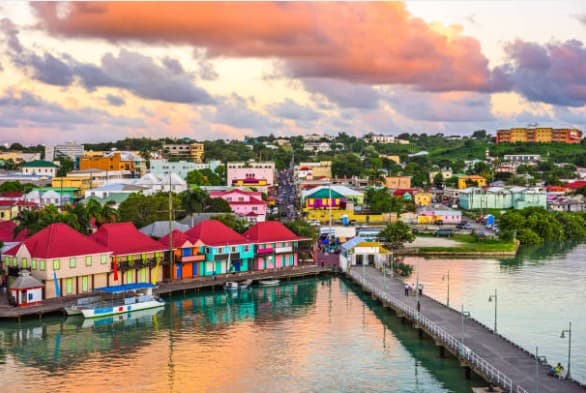
Everything British nationals need to know about relocating from the UK to Antigua in 2026: HMRC exit rules, residency pathways, healthcare, shipping costs, and where expats actually settle.
Relocating from the UK to Antigua: What to Know (2026)
TL;DR: Relocating from the UK to Antigua is more straightforward than most British nationals expect. You already drive on the left. English is the official language. Antigua is a Commonwealth member with a British High Commission in St. John's. Personal income tax was abolished in 2016. But you still need a clear HMRC exit plan, private health insurance, and a realistic picture of residency routes before you go.
Planning a move from the UK to Antigua? You're in good company. British nationals are one of AntiguaSearch.com's largest international audiences, and the questions coming through consistently point to one thing: people are doing more than dreaming.
Post-Brexit, Caribbean relocation has moved from fantasy to serious planning for a growing number of UK nationals. Antigua stands out from the crowd. You already drive on the left. The official language is English. Direct flights operate from London with British Airways and Virgin Atlantic. And unlike most Caribbean destinations, Antigua has deep structural ties to Britain that make the transition feel far less foreign.
That said, relocating from the UK to Antigua is not without complexity. HMRC has specific rules about tax residency. Healthcare works very differently from the NHS. Residency pathways have shifted recently, including one high-profile discontinuation that most guides still haven't caught up on.
This guide covers everything a British national needs to know in 2026: residency routes, tax implications, healthcare, shipping, costs, and where expats from the UK actually settle once they arrive.
Why Antigua Feels Familiar to British Movers
For British nationals, Antigua removes several of the friction points that make other Caribbean moves daunting.
You already drive on the left. This sounds minor, but it matters. Antigua drives on the left, just like the UK. Your muscle memory works from day one. For many British movers arriving from countries that drive on the right, this is one of the first things they notice and appreciate.
English is the official language. You won't need to navigate a language barrier for banking, legal documents, medical appointments, or everyday shopping. The local dialect has a warm Caribbean rhythm, but Antiguan English is fully intelligible from the moment you land.
Antigua is a Commonwealth member. The country joined the Commonwealth in 1981 and operates as a constitutional monarchy with a parliamentary system closely mirroring that of the United Kingdom. The political and legal frameworks will feel familiar. The British High Commission is based in St. John's and provides consular services to British nationals living on the island.
Direct flights keep the connection easy. British Airways and Virgin Atlantic both operate direct routes between London and V.C. Bird International Airport in St. John's. The flight takes around nine hours. You're not cutting yourself off from home.
Cricket is a shared language. Antigua is one of the great cricket nations of the Caribbean. The Antigua Recreation Ground in St. John's is one of the most atmospheric venues in world cricket. Sir Vivian Richards is a national hero. If you follow the game, you'll feel at home immediately.
CHOGM 2026 is coming to Antigua. The Commonwealth Heads of Government Meeting is being hosted in Antigua and Barbuda this year. It's a signal of just how central the UK-Antigua relationship remains.
What Does Life Actually Cost Compared to the UK?
Overall, Antigua costs roughly 20% less than the UK. A single person can live comfortably on around $1,100 per month excluding rent. A two-bedroom apartment in an expat-friendly area runs $1,500 to $2,500 per month. The zero income tax rate offsets the higher cost of imported goods, and most British movers find their net cost of living meaningfully lower than back home.
The headline figure: GlobalCitizenSolutions reports that Antigua's cost of living runs around 20% below the US and UK. For a family of four, estimated monthly costs sit around $3,900 excluding accommodation.
Where it gets expensive is imports. Antigua is a small island economy that ships in almost everything. Branded groceries, electronics, and vehicles cost noticeably more than in the UK. Expect to adjust your supermarket habits and lean into local produce, which is genuinely excellent.
Utility bills including water, electricity, and internet typically run $100 to $300 per month. The Eastern Caribbean Dollar (XCD) is pegged to the US dollar at 2.70 XCD to $1 USD, keeping exchange rates stable and predictable.
The hidden upside: no council tax, no national insurance contributions, and zero personal income tax since 2016. For higher earners, that shift alone transforms the monthly numbers considerably. The Antigua and Barbuda Sales Tax (ABST) applies at 17% on most goods and services, but as a consumption tax it only applies to what you actually spend.
Residency Options for UK Nationals in 2026
There are three main pathways to legal residence in Antigua: the standard 4-year continuous residency route, the fast-track Tax Residency Programme (requiring $100,000 annual income and a $20,000 flat annual tax), and Citizenship by Investment from $100,000. One critical thing to know upfront: the Nomad Digital Residence (NDR) was officially discontinued on 15 November 2025. Most guides online have not caught up with this change.
Visa-Free Entry First
British nationals can enter Antigua without a visa. The FCDO advises a 90-day visa-free stay as the standard allowance. In practice, immigration officers may grant up to 6 months at their discretion. This gives you time to scout neighbourhoods, meet local professionals, and start the formal residency process before committing fully.
The Standard Route: 4 Years Continuous Residence
According to Antigua's immigration department, any person who has been legally and ordinarily resident in Antigua for at least four continuous years can apply for a permanent resident permit. This typically involves holding a valid work permit or other legal status throughout that period, with no breaks shorter than six months. It is the slower path, but it requires no significant financial investment beyond normal living costs.
Tax Residency Programme: Fast-Track for Higher Earners
The Tax Residency Programme is the most popular fast-track option for British nationals. GlobalCitizenSolutions outlines the requirements: a minimum annual income of $100,000, a maintained residential address in Antigua, a minimum physical presence of 30 days per year, and a flat annual tax of $20,000.
In return, you receive permanent residency and full exemption from local income tax, capital gains tax, inheritance tax, and wealth tax. The flat $20,000 is all you pay. For a UK higher-rate taxpayer previously paying 40% or 45% on income above certain thresholds, the arithmetic is striking.
Citizenship by Investment (CBI)
For the fastest route to full citizenship and a second passport, Antigua's CBI programme offers several investment options. These include a non-refundable contribution to the National Development Fund from $100,000 for a single applicant, or an approved real estate investment from $200,000 with a five-year holding period.
Explore Antigua real estate listings on AntiguaSearch if you're considering property as your route into the programme. Processing time is officially 3 to 6 months, though backlogs in 2025 to 2026 have pushed timelines closer to 5 to 7 months.
The NDR Is Gone: Verify Before You Apply
The Nomad Digital Residence was a two-year visa for remote workers earning at least $50,000 per year. It was officially discontinued by the Antiguan government on 15 November 2025. No successor route has been announced. Many guides, agencies, and even some official embassy websites still list it as active. The old application website has lapsed and been resold to an unrelated commercial operator. If any website invites you to apply for the NDR today, it is out of date or not the government. Always verify current routes directly with Antigua's immigration authority before sending money or documents.
Are you a relocation lawyer, expat tax specialist, or real estate professional serving British clients in Antigua? Thousands of UK nationals are actively researching this exact move. Add your listing to AntiguaSearch and put your services in front of the right audience.
HMRC Doesn't Let Go Easily: UK Tax on the Way Out
Moving to Antigua does not automatically end your UK tax obligations. HMRC determines your residency status using the Statutory Residence Test (SRT), a structured framework based on days spent in the UK, ties to the UK, and work patterns. Getting this wrong means HMRC may continue taxing your worldwide income long after you've arrived in the Caribbean.
How the Statutory Residence Test Works
The SRT has three layers, applied in sequence. The first is the automatic overseas test. According to BDO UK, if you were UK-resident in one or more of the prior three tax years and you spend fewer than 16 days in the UK during the year in question, you are automatically non-resident, and the analysis stops there.
If you don't meet that test, you move to the automatic UK residence test. If you meet neither automatic test, you apply the sufficient ties test, which weighs up your connections to the UK (family, accommodation, work, and time patterns) against the number of days you're present.
The SRT runs on the UK tax year (6 April to 5 April), not the calendar year. A mid-year move may produce split-year treatment, but only if you satisfy one of eight specific cases. Skybound Wealth notes that split-year treatment is not automatic: it is case-based, evidence-driven, and often misunderstood.
Notifying HMRC
You must formally notify HMRC that you're leaving. GOV.UK guidance requires you to complete the residence section of your Self Assessment return (form SA109) and send it by post. You cannot use HMRC's online services for this notification. If you're leaving while employed by a UK employer full-time, you also need to complete form P85.
Visiting the UK After You Leave
You can still visit the UK without automatically resuming UK residency. GOV.UK confirms that if you work full-time abroad, you can usually visit the UK for up to 90 days per tax year, as long as you work no more than 30 of those days in the UK.
The 5-Year Window and New IHT Rules
Be aware of the Temporary Non-Residence (TNR) rules. BDO explains that if you return to the UK within five years of departure, capital gains realised while abroad can become taxable on your return. You need to maintain non-UK residence for a minimum of five full tax years to step fully outside these anti-avoidance provisions.
From 6 April 2025, UK inheritance tax rules also changed significantly. Skybound Wealth notes that if you have been UK tax-resident for more than 10 of the previous 20 years, you may remain exposed to UK IHT on worldwide assets for a period after leaving the country. The exposure depends on how long you were resident and tapers over time.
UK Rental Income and No DTA
If you retain a UK property and rent it out, GOV.UK confirms that non-residents still pay UK tax on UK-source income. There is no double taxation agreement between the UK and Antigua, though a Tax Information Exchange Agreement is in place. HMRC and the Antiguan tax authority share financial account information automatically.
Cross-border tax planning is not optional here. Connect with finance and legal professionals in Antigua on AntiguaSearch who understand obligations on both sides.
From the NHS to Private Cover: Healthcare in Antigua
There is no NHS equivalent in Antigua. Private health insurance is essential and typically costs $240 to $375 per month for a middle-aged expat, including medical evacuation cover. The upside: appointments are shorter than many NHS waits, doctors are highly competent, and the main public hospital is one of the most advanced in the Eastern Caribbean.
The Hospital and Clinics
Antigua has one main public hospital: the Sir Lester Bird Medical Centre (formerly Mount St. John's Medical Centre) in St. John's. Chestertons Antigua reports it has around 185 beds and is considered one of the most advanced facilities in the Eastern Caribbean. There are also approximately 25 public health clinics spread across six medical districts, positioned within three kilometres of major villages and towns.
Private clinics operate across the island, concentrated in St. John's. Havenantigua.com notes that many doctors in Antigua trained in England, Cuba, Canada, and India, and are every bit as competent as colleagues in those countries. General consultations at private clinics run roughly $50 to $150. X-rays typically return results within the same appointment.
NHS vs Antigua: The Key Difference
Expat Focus explains that unlike the NHS (free at the point of use, funded from general taxation), Antigua's Medical Benefits Scheme is payroll-based. Expats must be lawfully resident for 12 consecutive months and contribute for a further 6 months before any benefits can be claimed. In practice, most British expats use private healthcare from day one.
The upside: no lengthy GP waiting lists. No paperwork-heavy referral chains for most appointments. British expats consistently report that routine healthcare in Antigua feels more personal and less rushed than the NHS experience in busy UK cities.
What to Budget and Plan For
Based on quotes from Sagicor Life and MSH International, a comprehensive private health insurance policy including medical evacuation cover runs $240 to $375 per month for a middle-aged expat. Make sure your policy covers outpatient care as well as inpatient stays. Many cheaper plans cover only hospitalisations and can leave you exposed for routine consultations, fracture treatment, and emergency room visits.
For complex specialist care, travel to the United States or nearby islands may be necessary. Build that into your planning. Make sure your policy includes medical evacuation cover.
Browse health and medical services in Antigua on AntiguaSearch to find vetted practitioners and clinics near your preferred area.
Where British Expats Live in Antigua
The south and west coasts draw the largest expat communities. English Harbour in St. Paul parish feels most distinctly British, with Nelson's Dockyard as a living reminder of the island's shared history. Jolly Harbour in St. Mary parish offers a purpose-built marina village with strong expat social infrastructure, a golf course, and a supermarket you can walk to.
English Harbour and Falmouth Harbour (St. Paul)
English Harbour is home to one of Antigua's largest expat communities, drawn by the Nelson's Dockyard UNESCO World Heritage Site, world-class yachting facilities, and a concentration of upscale restaurants and bars. The 18th-century British naval base, now a working marina and museum, gives the area a historical familiarity that British movers find immediately engaging.
Falmouth Harbour sits adjacent and shares much of the same character. Chestertons Antigua describes this area as the island's prestige address. Property prices range from $500,000 for a quality apartment to $5 million and above for waterfront villas.
The Sunday evening barbecue and live music event at Shirley Heights, overlooking English Harbour, is one of those weekly rituals that becomes genuinely central to expat social life. Browse St. Paul parish listings on AntiguaSearch.
Jolly Harbour (St. Mary)
Jolly Harbour is frequently the first recommendation for expats who want convenience alongside Caribbean living. The purpose-built community on the west coast includes a 700-berth marina, an 18-hole golf course, a supermarket, restaurants, cafes, and private security throughout the development. Many residents cover their daily needs without leaving the neighbourhood.
Expat Focus notes that Jolly Harbour is especially popular with yacht crew, hospitality professionals, and expats who value a close-knit community atmosphere. Rental prices for two-bedroom condos start around $1,500 to $2,500 per month. Waterfront villas with private docks are also available at various price points.
Browse St. Mary parish listings on AntiguaSearch.
Dickenson Bay (St. George)
Located on Antigua's northwest coast, Dickenson Bay offers one of the island's most sheltered swimming beaches, with calm reef-protected waters. It's more resort-oriented than Jolly Harbour or English Harbour, with a strong concentration of hotels, restaurants, and watersports operators. Expats who prefer a quieter residential feel sometimes settle at the calmer northern end of the bay.
St. John's (St. John's Parish)
The capital is the practical choice for families with school-age children. It hosts most of the island's administrative services, the main supermarkets, hospitals, and commercial infrastructure. It's less picturesque than the harbour towns but the most convenient for day-to-day urban life.
Shipping Your Belongings from the UK to Antigua
Plan for four to six weeks by sea. Most UK sailings to Antigua are not direct: the container typically routes through a US hub, often Miami, before completing the final leg to Deep Water Harbour in St. John's.
According to 1st Move International, the average cost of an international move from the UK to Antigua starts from £1,518 for a small move via shared container and £3,843 for a full 20ft container. Shared container shipping means your items travel alongside other customers' goods. You pay only for the space you use. It's the most economical option for a one or two-bedroom household.
Import Costs to Budget For
On top of freight, you'll face customs charges at Deep Water Harbour. Import duty averages around 20% depending on the item. The Antigua and Barbuda Sales Tax (ABST) now applies at 17% on the CIF value (cost plus insurance plus freight), having been raised from 15% in January 2024. A Revenue Recovery Charge of 10% on the CIF value also applies.
1st Move International confirms that permanent residents who can prove they intend to live in Antigua long-term may be eligible to import used personal effects duty-free. Antiguans returning home who have lived abroad for more than 10 years can bring in used household goods owned for at least a year free of import duty and ABST.
Practical Tips for the Move
UK appliances run on 240V at 50Hz. Antigua uses 110V in some areas and 220V in others. Check your appliances before packing and factor in whether it makes more sense to sell in the UK and replace locally.
Declutter before you pack. Import duty is calculated on the declared value of goods. Every item you ship has a cost attached at the other end. Focus your container on items with sentimental value or those that would be expensive to replace on the island.
Use a mover holding FIDI FAIM accreditation, the global benchmark for international removals firms. Ask specifically about their Antigua customs experience. A licensed broker is required for shipments above EC$5,000 in commercial value, and having a mover who knows the process at Deep Water Harbour saves significant time and frustration.
Antigua Is Ready for You. Are You Ready for Antigua?
For British nationals, Antigua is the most naturally compatible Caribbean island for a permanent move. The driving side, the language, the Commonwealth connection, the cricket, the direct flights, and the British High Commission all reduce the culture shock that accompanies other destinations.
The tax environment is genuinely compelling. Personal income tax was abolished in 2016. There is no capital gains tax, no inheritance tax, and no wealth tax on residents. For a higher-rate UK taxpayer, the financial case is clear.
Three things matter before you commit. Get specialist UK tax advice on your HMRC exit well before your departure date: leaving is not the same as becoming non-resident, and the consequences of getting it wrong are significant. Secure comprehensive private health insurance before you arrive, including medical evacuation cover. And verify any residency programme you've read about directly with Antigua's immigration authority: the landscape has changed recently, and outdated guides can lead you down the wrong path.
Antigua has 365 beaches, one for every day of the year. The expat community is warm, established, and welcoming to British movers. Whether you settle in the historic harbour towns of St. Paul, the marina lifestyle of St. Mary, or the capital's urban energy in St. John's, the island rewards those who arrive properly prepared.
Explore all of Antigua's parishes on AntiguaSearch to find your ideal neighbourhood. And when you're ready to look at property, browse Antigua real estate listings from agents and developers already listed on the platform.
Frequently Asked Questions
Can British nationals buy property in Antigua and Barbuda?
Yes. Foreign buyers, including British nationals, can purchase property in Antigua and Barbuda freely. You will need to obtain an Alien Landholding License (ALHL), which typically costs 5% of the property value and takes 3 to 5 months to approve. Stamp duty of 2.5% and legal fees of 1% to 2% also apply. Buyers purchasing through the Citizenship by Investment Programme are exempt from the ALHL and stamp duty, which can represent a meaningful saving on higher-value properties.
Do I need a visa to move to Antigua from the UK?
No visa is required to enter Antigua as a British national. The FCDO advises a 90-day visa-free stay as the standard allowance. In practice, immigration officers may grant up to 6 months at their discretion. For stays beyond the visa-free period, you will need to apply for a residency permit or a citizenship pathway. The Nomad Digital Residence, which many guides still reference as an option, was officially discontinued on 15 November 2025 and no successor route has been announced.
What happens to my UK State Pension if I move to Antigua?
You can continue to receive your UK State Pension in Antigua, but it will be frozen at the rate it was when you left the UK. Antigua does not have a reciprocal social security agreement with the UK that would allow annual uprating. You can continue making voluntary National Insurance contributions (Class 2 or Class 3) to protect your State Pension entitlement while living abroad. GOV.UK guidance on moving abroad covers the relevant details on pensions and benefits.
Is Antigua safe for British expats?
Antigua is generally considered one of the safer Caribbean islands. Violent crime against expats is rare. Petty theft can occur in tourist areas and in parts of St. John's, but standard precautions apply as they would in any city. Expat communities in Jolly Harbour and English Harbour are gated or marina-based, providing an additional layer of day-to-day security. Internet infrastructure has improved significantly, with fibre-optic speeds of 100 to 300 Mbps available in most developed areas, making it well suited to remote working.
Does Antigua have a double taxation agreement (DTA) with the UK?
No. The UK and Antigua and Barbuda do not have a double taxation agreement. A Tax Information Exchange Agreement (TIEA) is in place, however, meaning HMRC and the Antiguan tax authority share financial account information automatically. British expats who retain UK-source income (such as rental income from a UK property) remain liable for UK tax on that income as non-residents. Seek specialist advice covering both UK and Antiguan obligations before you make your move.