
Schools in Antigua 2026: Island Academy, CCSET & Secondary Guide
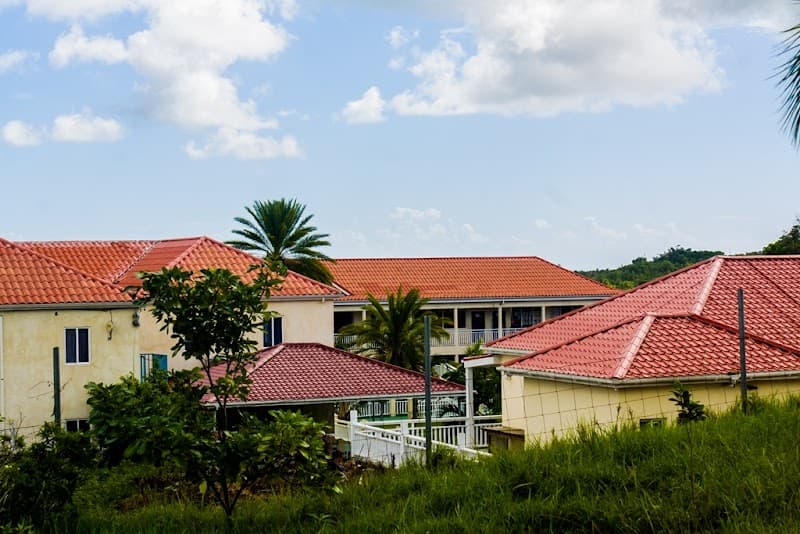
The complete guide to schools in Antigua for expat and NDR visa families in 2026. Covers Island Academy (IB Diploma, EC$12,930–25,860/year), CCSET International Academy (Canadian OSSD), Antigua International School (bilingual English-Spanish), government secondary schools, and NDR visa enrollment rules including the private-school requirement and student permit process.
Schools in Antigua 2026: Island Academy, CCSET & Secondary Guide
TL;DR: Antigua has three international schools for expat families: Island Academy (IB Diploma, EC$12,930–25,860/year), CCSET International Academy (Canadian OSSD), and Antigua International School (bilingual English-Spanish). NDR visa holders must enroll children in private school and apply for a student permit. Government secondary schools including Jennings, St. Mary's, and All Saints are free and sit Antigua's CSEC exams.
If you're moving to Antigua with children, finding the right school is probably the first question you Google before you even book the flight. You're not alone. Searches for schools in Antigua spike every July and August as families on the Nomad Digital Residence visa land for the new academic year. The problem? Most online guides are vague, outdated, or written for a completely different country.
This is the complete local guide. We cover every international school option on the island, how tuition fees break down in Eastern Caribbean dollars, which government secondary schools are worth knowing about, and exactly what NDR visa holders must do before the first day of term.
The academic year in Antigua runs from September to June across three terms, mirroring the UK calendar. That means enrollment decisions are being made right now. Read this before you commit to anything.
Browse all education listings in Antigua on AntiguaSearch to compare schools, tutoring services, and driving schools across every parish.
What Are the International School Options in Antigua?
Antigua has three main international schools: Island Academy (IB), CCSET (Canadian OSSD), and Antigua International School (bilingual). Each targets a different learning pathway and age range. For most expat families, the choice comes down to which qualification your child needs for their next destination and what budget you're working with.
All three are private schools based in or near St. John's. All three satisfy the NDR visa requirement that children of nomad visa holders must attend private school. None of them are huge; small class sizes are a consistent feature and a genuine selling point on an island this size.
The international school sector is built around three distinct diploma pathways: the Caribbean CSEC, the globally portable IB Diploma, and the Canadian OSSD. Understanding which path fits your child's future university plans is the starting point for every enrollment conversation.
Island Academy Antigua: IB Diploma on a 15-Acre Campus
Island Academy International is Antigua's headline school for expat families. It's the only International Baccalaureate World School in the country, a status it has held since 2011. That means Island Academy is the sole institution in Antigua where students can sit the full IB Diploma Programme, a qualification recognized by universities from Harvard to Edinburgh.
The school runs from Kindergarten all the way through to Grade 13 (pre-university level). With over 270 learners drawn from more than 20 nationalities, it offers one of the most genuinely international environments in the Eastern Caribbean. Staff and students represent a wide mix of cultural backgrounds, and the school's "Unity in Diversity" philosophy runs through everything from morning assembly to after-school activities.
The campus sits at Oliver's Estate on Buckley's Main Road, a green 15-acre hillside property a short drive from central St. John's. Facilities include interactive projectors, a ceramics studio, a music room, and fully equipped science laboratories. The school also runs a bus service across the island; Term 2 bus fees for January to April 2026 are EC$370, with an annual bus pass at EC$20.
Tuition in EC$: Annual fees run from EC$12,930 at the lower end (early years) to EC$25,860 for upper secondary, depending on year group. These are tuition-only figures. Families should budget separately for registration, a Complete School Pack covering textbooks and classroom resources, a Digital Learning Fee for online platforms, and end-of-year trip contributions. The school accepts payment by cash, cheque, bank transfer, Visa, and Mastercard; monthly installments are available with 25% of Term 1 due before 28 August each year.
What Island Academy prepares students for:
- Antigua and Barbuda's national assessments
- Caribbean Examinations Council (CXC) CSEC regional exams in Grades 7 to 11
- The IB Diploma Programme in Grades 12 and 13
For families who may move again after Antigua, the IB Diploma's global portability is the critical advantage. Yachting families with school-age children have recommended Island Academy for years, precisely because an IB qualification travels with the student wherever they go next.
Contact Island Academy directly at (268) 460-1094 or visit islandacademy.com to confirm current fee schedules and availability before the August 28 payment deadline.
Is CCSET Right for Families Heading to Canada?
CCSET International Academy is the best fit for families planning to relocate to Canada after Antigua, or those who want a North American-recognized secondary qualification. It awards the Ontario Secondary School Diploma (OSSD), the same credential issued to Canadian high school graduates, which Canadian universities know exactly how to read and assess.
CCSET is based in Cedar Grove, St. John's, and operates in partnership with CCSET-Centennial College. That institutional link strengthens the North American dimension of the program. Class sizes are deliberately small, which families consistently cite as a reason for choosing a smaller school over a larger campus.
The OSSD is recognized across Canada and at international universities familiar with the Canadian system. For a student schooled in Antigua on the CCSET pathway, applying to a Canadian university is a straightforward process: admissions offices understand exactly how the grades translate.
The school does not publish its fee schedule publicly. Tuition and enrollment costs are shared directly with interested families. Contact CCSET International Academy at (1) 268-764-1366 to request a full fee breakdown and current enrollment availability.
What Does Antigua International School (AIS) Offer?
Antigua International School is Antigua's bilingual option, offering an English-Spanish curriculum from Pre-K through Grade 12. It's a strong fit for families from Latin America, parents who want their children to graduate fully bilingual, or expats who plan to move next to a Spanish-speaking country.
AIS holds accreditation from the Council of International Schools (CIS), which involves regular audits and demanding standards. The CIS mark matters: it signals that the school's programs, governance, and facilities meet an independently verified international benchmark.
The curriculum is broad. Core subjects include English, mathematics, science, social studies, Spanish, French, music, art, physical education, and technology. The program is designed to develop well-rounded students with strong analytical skills rather than rote learners.
For families from non-English speaking backgrounds, AIS offers an environment where both English and Spanish are genuinely valued. Children who arrive without strong English can build fluency in a setting designed for multilingual learners. For native English speakers, Spanish immersion from an early age is a significant long-term asset.
Tuition is not listed publicly; families should contact AIS directly via antiguais.org to request current enrollment information.
Government Secondary Schools: Jennings, St. Mary's, and All Saints
Government secondary schools in Antigua are free and compulsory for children aged 5 to 16 under Antigua and Barbuda's Education Act 2008. They prepare students for the Caribbean Secondary Education Certificate (CSEC), the regional exam administered by the Caribbean Examinations Council. The CSEC is widely accepted across the English-speaking Caribbean and recognized internationally as proof of solid secondary achievement.
For older children in NDR visa families who are permitted to attend private school only, government schools are not an option. But for expats on permanent residency, or for families researching the full landscape before making a decision, the government secondary schools are strong institutions with real track records.
Jennings Secondary School sits on Valley Road in the Jennings area of St. John's Parish. It fields competitive sports teams across cricket and football and participates in the National Secondary Schools Theatre Festival, with strong drama results. For families living in the west of the island, Jennings is the closest secondary option.
St. Mary's Secondary School is located in Bolands, St. John's Parish. The school appears consistently in government secondary rankings and takes its CSEC results seriously. Students applying from overseas will need to present proof of legal residency, a birth certificate, vaccination records, and academic records from their previous school.
All Saints Secondary School is one of Antigua's oldest secondary schools, established in 1963 in the All Saints area. Its motto is "From Possibility to Realization." The school has a 3,800-strong Facebook following and competes across football, dance, and drama at national level. Facilities-wise, it operates as a full government secondary with CSEC as the primary qualification pathway.
Other government secondary options in St. John's Parish include Antigua Girls' High School (Newgate Street), Christ the King High School (Old Parham Road), Princess Margaret School, and Glanvilles Secondary School further to the north.
Government schools operate a September-to-June calendar aligned with the UK model. The main summer break runs July to August, with two shorter holiday periods at Christmas and Easter.
NDR Visa Families: What Are the School Enrollment Rules?
Children of Antigua's Nomad Digital Residence (NDR) visa holders must attend private school only. Government schools are not an option. All children aged 5 to 16 are legally required to be enrolled in school for the full duration of the visa. After selecting a private school, parents must apply for a student permit through the Antigua and Barbuda Department of Immigration.
This is a non-negotiable requirement, confirmed on the official NDR government portal at nomad.gov.ag. Families who arrive without completing this process are technically out of compliance with the terms of their visa.
The practical enrollment process is straightforward:
- Secure your NDR visa approval (processed within 5-7 business days online)
- Choose your private school and confirm a place
- Apply for a student permit from the Department of Immigration before the child starts school
The NDR visa itself requires a minimum annual income of US$50,000, proof of remote employment or self-employment, health insurance covering the full two-year stay, and a clean criminal record. The application fee starts from US$1,500 for an individual and increases for family applications; families with more than three dependents pay an additional US$650 per extra dependent.
The no-income-tax benefit of the NDR visa is well-known. What catches some families off guard is the private-school-only requirement. Budget for private school fees before you calculate the cost of living. Island Academy's maximum annual tuition of EC$25,860 (roughly US$9,600 at current exchange rates) should be a line item in your relocation plan before you arrive.
Questions to Ask Every School Before August Enrollment
Every family's situation is different. Before signing any enrollment contract, here are the questions that matter most for expat families relocating to Antigua in 2026:
On fees:
- What is the full cost for the year, including registration, school pack, digital learning fees, and bus service?
- Are fees quoted in EC$ or US$? Is there a currency surcharge for non-local families?
- What is the payment deadline and what are the installment options?
On curriculum and qualifications:
- Which exit qualification does my child work toward? (IB, OSSD, CSEC)
- If we relocate mid-year, what transcript documentation will you provide?
- Are there additional costs for IB exam registration or CSEC exam fees?
On immigration:
- Do you have experience supporting families through the student permit process?
- Can you provide a school enrollment confirmation letter for Immigration?
On practicalities:
- What is the bus route and fee for my area of the island?
- Are places still available for September 2026? What is the enrollment deadline?
- What vaccinations are required for enrollment?
For families arriving during the year rather than at September start, ask whether the school accepts mid-term admissions. Island Academy confirms that places should be secured early; call (268) 460-1094 to check current availability. CCSET and AIS similarly handle enrollment on a space-available basis.
Conclusion
Antigua is a genuinely strong place to raise children. The island has an above-90% literacy rate, a small-school culture that fosters fast friendships, and an education sector that punches above its weight for such a small nation.
The three key takeaways for expat families in 2026:
- Island Academy is the right choice for families who want a globally portable qualification. The IB Diploma travels wherever your career takes you next.
- CCSET makes the most sense if Canada is in your family's future. The OSSD removes friction from Canadian university applications entirely.
- NDR families must plan the student permit before arrival. Private school enrollment is a visa condition, not an afterthought.
Whether you're weighing international schools or exploring secondary options for a teenager, explore all education listings in St. John's on AntiguaSearch for a full picture of what's available across the island.
Is your school, tutoring service, or educational business listed on AntiguaSearch? Add your listing for free and connect with the thousands of expat and NDR visa families searching for exactly what you offer every month.
Frequently Asked Questions
Can NDR visa children attend government schools in Antigua?
No. The official Antigua and Barbuda Nomad Digital Residence program requires that all children aged 5 to 16 traveling on an NDR visa attend private school for the full duration of the visa. Government schools are not permitted. Parents must also apply for a student permit from the Antigua and Barbuda Department of Immigration after selecting their private school. This is confirmed on the official NDR government portal at nomad.gov.ag.
How much does Island Academy Antigua cost per year?
Island Academy's annual tuition runs from EC$12,930 to EC$25,860 depending on year group, with lower fees for early years and higher fees for senior secondary. This tuition figure does not include registration, the Complete School Pack (textbooks and classroom resources), the Digital Learning Fee (online platform subscriptions), bus fees, or end-of-year trip contributions. A full fee breakdown is available at islandacademy.com, and 25% of Term 1 fees must be paid by 28 August each year.
What is the OSSD and why does CCSET International Academy offer it?
The Ontario Secondary School Diploma (OSSD) is the standard secondary leaving qualification issued across the Canadian province of Ontario. CCSET International Academy in Cedar Grove, St. John's, offers the OSSD in partnership with CCSET-Centennial College. The qualification is recognized throughout Canada and understood by Canadian university admissions offices, making it the most direct pathway for students planning post-secondary education in Canada. Tuition fees are shared directly with families; contact CCSET on (1) 268-764-1366 to inquire.
When does the school year start in Antigua?
The academic year in Antigua and Barbuda opens in September and closes in June, following a UK-style three-term calendar. Term 1 runs September to December, Term 2 January to April, and Term 3 May to June. The main summer recess covers July and August, which is also when Antigua Carnival takes place. Most schools require enrollment paperwork and initial fee payments before the end of August.
Are there government secondary schools worth considering for expat teenagers?
Government secondary schools in Antigua are free, well-established, and prepare students for the Caribbean Secondary Education Certificate (CSEC). Schools like Jennings Secondary, St. Mary's Secondary in Bolands, and All Saints Secondary (established 1963) have strong track records in academics, drama, and sport. However, NDR visa families cannot use government schools under their visa conditions. Families on permanent residency or other eligible visa categories can enroll children in government schools with proof of legal residency, a birth certificate, vaccination records, and previous academic records.