
Citizenship by Investment Update November 2026
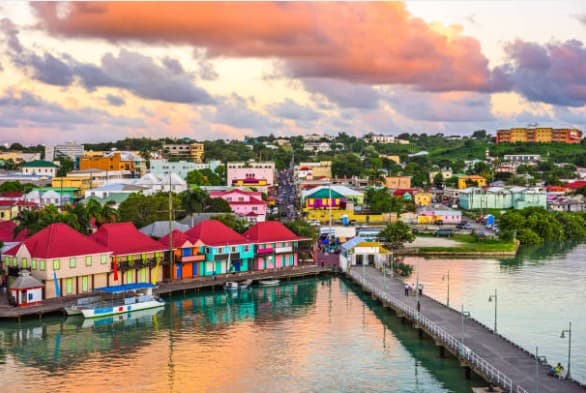
Antigua's Citizenship by Investment Programme is evolving fast. From new 30-day residency rules and the ECCIRA regional regulator to historic CHOGM 2026 outcomes, here is what every investor needs to know.
Antigua's CIP Program in 2026: What's Changing and Why It Matters
TL;DR: Antigua and Barbuda's Citizenship by Investment Programme is undergoing its biggest transformation in a decade. New 30-day residency rules, the launch of the regional ECCIRA regulator, EU phase-out negotiations, and a landmark CHOGM 2026 summit in St. John's have reshaped the conversation around Caribbean investment citizenship. The CIP is still open, still operational, and one of the region's most family-friendly programmes. Here is what every investor and stakeholder needs to know right now.
In November 2026, the world came to St. John's. World leaders, business executives, and investors gathered in Antigua and Barbuda for CHOGM 2026, making this the smallest country in Commonwealth history to host the biennial summit. At the same moment, Antigua's Citizenship by Investment Programme was navigating its most consequential period since it launched in 2013.
EU negotiations, landmark regional reforms, a new residency rule, and headlines about shutdown dates were all colliding at once. The noise was loud. The facts were often buried.
The two stories are deeply connected. Antigua hosted CHOGM under the theme "Accelerating Partnerships and Investment for a Prosperous Commonwealth." Investment is Antigua's brand. The CIP has been a central part of that story for over a decade, funding infrastructure, reducing public debt, and attracting global talent and capital. Understanding what is changing, and what is not, matters for investors, applicants, real estate professionals, and anyone with a stake in Antigua's economy.
This post cuts through the noise. Here is a clear, fact-based look at the CIP programme's current status, the reforms underway, and what the CHOGM summit signals for Antigua's investment future.
What Is Antigua's CIP Programme and Who Is It For?
Antigua's Citizenship by Investment Programme grants full citizenship to qualifying investors and their families in exchange for a significant economic contribution to the country. It has been running since 2013 and ranks as one of the Caribbean's most established and family-inclusive options.
There are four approved investment routes. The National Development Fund donation starts at USD 230,000 for a family of up to four. The University of the West Indies Fund option sits at USD 260,000 and includes a one-year scholarship for a qualifying family member. Approved real estate starts at USD 300,000, and a direct business investment requires a minimum of USD 1,500,000. You can browse Antigua real estate listings through the AntiguaSearch directory to get a sense of approved property options.
Since launch, the programme has issued over 9,000 passports to more than 5,200 applicants. Demand remained strong through 2024, with 739 new applications filed and 622 passports granted in the first six months of that year alone. The 2026 Henley Passport Index placed Antigua's passport 24th globally, offering visa-free or visa-on-arrival access to over 150 destinations, including the Schengen Area and the United Kingdom.
The programme also allows dual citizenship. Siblings, parents, grandparents, and adult children up to age 30 can be included in a single application, making it one of the most inclusive family definitions in Caribbean CBI. For many families, the USD 230,000 NDF route covering four people is simply the most cost-effective path to a second passport available anywhere in the region.
What New Rules Are Changing for CIP Applicants in 2026?
Three significant updates now apply to new CIP applicants. The core investment routes and minimum investment thresholds have not changed. What has changed is the governance framework and the conditions attached to citizenship once it is granted.
1. The 30-day residency requirement. Under the Citizenship by Investment (Amendment) Bill 2026, new citizens must spend a cumulative total of 30 days in Antigua and Barbuda within their first five years of citizenship. This replaces the previous requirement of just five days over the same period. The word "cumulative" is important. Thirty days spread across five years is two Caribbean holidays. For most families, it is a welcome reason to return to the island, not an obstacle.
2. Mandatory interviews. All applicants and dependants aged 16 and older are now required to complete a formal interview, conducted either in person or virtually, as part of the due diligence process. This requirement was already being applied administratively before the bill formalised it in law.
3. Independent audits. The Citizenship by Investment Unit (CIU) must now undergo annual independent financial audits and biennial operational audits, conducted under internationally accepted accounting standards. This is a meaningful governance upgrade that strengthens the programme's credibility and long-term sustainability.
These changes align Antigua's domestic law with the ECCIRA regional framework. They apply prospectively to new applicants. Existing CIP citizens who already satisfied the previous five-day residency requirement are not retroactively affected by the new 30-day rule.
What Is ECCIRA and Why Does It Matter?
ECCIRA is the Eastern Caribbean Citizenship by Investment Regulatory Authority: a single regional body that will oversee all five Caribbean CBI programmes under one unified framework. It is the first regulator of its kind anywhere in the region, and its launch signals a fundamental shift in how Caribbean investment citizenship is governed.
The five participating nations are Antigua and Barbuda, Dominica, Grenada, St. Kitts and Nevis, and Saint Lucia. Together, they agreed to harmonise their CBI standards under a shared regulatory framework, including unified due diligence procedures, a centralised applicant denials database, mandatory biometric data collection, standardised interview protocols, and common minimum investment thresholds. ECCIRA is expected to become fully operational in September 2026.
The practical impact is significant. Under this framework, an applicant denied by one national unit cannot simply re-apply to another programme and avoid scrutiny. The shared denials database closes that gap entirely. Agents, developers, and due diligence providers must also receive regional approval from ECCIRA before they can be licensed by any individual national CIU.
For investors, ECCIRA is a signal of professionalism, not restriction. The programmes that survive international pressure will be the ones that demonstrate they can govern themselves credibly. Caribbean CBI is not retreating. It is restructuring. You can find licensed professionals operating in this space through the government services directory on AntiguaSearch.
If you are a CIP agent, legal adviser, real estate developer, or financial professional working in this space, make sure investors can find you. Add your business listing on AntiguaSearch for free and reach thousands of people actively searching the directory right now.
The EU Phase-Out Deadline Explained: What November 12 Really Means
Headlines in October and early November 2026 caused genuine alarm. Many suggested Antigua's CIP would shut down on November 12. That is not accurate, and Prime Minister Gaston Browne publicly corrected the record.
Here is what actually happened. The European Commission formally requested in June 2026 that Antigua and Barbuda wind down its CIP by June 1, 2028. The request was grounded in a revised EU Visa Suspension Mechanism adopted in December 2025. Under this new framework, operating any CBI programme, regardless of how well it is administered, became a standalone reason to suspend Schengen visa-free access for a country's nationals.
Antigua was given until November 12, 2026 to formally communicate its position to the European Commission. That date was a response deadline, not a shutdown date.
Prime Minister Browne made this distinction explicit on the Browne and Browne Show on October 31. He criticised political opponents for misrepresenting the deadline and emphasised that the government had not announced an immediate closure of the programme.
In an October 30 letter to European Commissioner Magnus Brunner, Browne formally proposed a conditional phase-out by the end of 2030, two years beyond the EU's preferred June 2028 timeline. The proposal is conditional on the EU agreeing to provide financial and technical assistance to manage the economic consequences of winding down. As of publication, no final agreement has been reached and the EU has not publicly confirmed it accepts the 2030 extension.
The economic stakes explain the government's cautious approach. CIP revenues helped Antigua achieve a primary fiscal surplus of nearly 5 percent of GDP in 2025, while public debt fell from approximately 101 percent of GDP in 2020 to an estimated 68 percent in 2025. Prime Minister Browne has warned that losing approximately USD 100 million annually in CIP revenue would have serious consequences for infrastructure projects, public services, and banking institutions that have lent against anticipated CIP proceeds.
The programme remains open and processing applications while negotiations continue.
CHOGM 2026: How Antigua Took Centre Stage for Global Investment
Antigua and Barbuda made history from November 1 to 4, 2026, becoming the smallest country ever to host a Commonwealth Heads of Government Meeting. Over 3,000 delegates from 56 member nations gathered in St. John's under the theme "Accelerating Partnerships and Investment for a Prosperous Commonwealth." The timing carried extra significance: the summit opened on Antigua's 45th Independence anniversary.
King Charles III, Head of the Commonwealth, arrived in Antigua on October 30 and attended the summit. Sir Vivian Richards, Antigua's cricketing legend and national hero, was appointed as CHOGM 2026 Envoy. The summit's official logo, designed by Chaneil Imhoff after winning a national competition, featured the frigate bird, Antigua's national bird, symbolising freedom, strength, and forward movement.
The summit delivered outcomes that exceeded expectations. Commonwealth Secretary-General Shirley Botchwey announced that the meeting mobilised over USD 500 million in new financial commitments, targeting trade, climate resilience, and opportunities for young people. For the first time in CHOGM history, investors and development partners sat at the table alongside heads of government to review bankable projects worth USD 52 billion across 28 countries.
Key funding announcements included the Commonwealth Aspiration Fund, a proposed USD 300 million mechanism designed to help 10 million young people develop skills for employment and entrepreneurship. Progress was also reported on the USD 700 million Commonwealth Net Zero Fund, targeting renewable energy investment across member nations. A new Commonwealth Nature Initiative launched with early commitments of USD 202 million. Leaders committed to doubling intra-Commonwealth trade by 2030. On reparations, the United Kingdom agreed to engage in structured, time-bound, good-faith dialogue on the transatlantic trafficking of enslaved Africans, a significant step for Caribbean nations who have long pressed this issue.
Prime Minister Browne described it as "an extremely successful meeting" and noted that Antigua had "set a new framework for future Commonwealth meetings, meetings that will be more impactful and will create greater value for the peoples of the Commonwealth."
For more on the summit, visit the CHOGM 2026 listing on AntiguaSearch and read our comprehensive CHOGM 2026 guide for the full story of Antigua's historic hosting role.
What CHOGM Outcomes Mean for Investors Eyeing Antigua
CHOGM delivered a clear signal: Antigua is a serious investment partner, not just a tourism destination. The summit placed the country at the centre of USD 500 million in new commitments and USD 52 billion in bankable projects, with private investors sitting alongside heads of government for the first time in CHOGM history. That is a meaningful shift in how global capital engages with the Commonwealth.
For the investment community specifically, a Leaders' Breakfast on Jumby Bay Island brought together more than 30 heads of government alongside nearly 50 business executives, investors, and multilateral representatives to discuss real opportunities. That format was deliberate. Antigua's government wanted commitments, not just communiqués.
The energy partnerships announced at CHOGM are particularly relevant. Octopus Energy announced a new alliance with the Organisation of Eastern Caribbean States, the Sustainable Markets Initiative, and the Eastern Caribbean Central Bank to accelerate renewable energy development across small island states. The initiative builds on Octopus Energy's existing partnership with the Government of Antigua and Barbuda, reducing fossil fuel dependence and advancing affordable energy solutions for the region.
Antigua also assumed the Commonwealth chairmanship following the summit, keeping it at the centre of Commonwealth diplomacy until the next meeting. For investors considering real estate, residency, or CIP applications, that visibility matters. It signals a government with an active, outward-facing agenda and a proven ability to execute at scale.
Browse businesses and services across the capital with the St. John's parish directory on AntiguaSearch, covering everything from legal and financial services to real estate professionals operating in this investment environment.
The US Visa Issue: What CIP Investors Need to Know
One complication that emerged in early 2026 deserves a clear and factual explanation. It is a real development, but it is also one that has been frequently misunderstood.
Presidential Proclamation 10998, signed on December 16, 2025 and effective from January 1, 2026, imposed partial US visa restrictions on Antiguan nationals. The affected categories include B-1/B-2 tourist and business visas, F and M student visas, and J exchange visitor visas. Immigrant visa processing was also paused from January 21, 2026.
Existing valid US visas issued before January 1, 2026 were not revoked. The proclamation cited CBI programmes without substantial residency requirements as its rationale, and it included a built-in 180-day review cycle, with diplomatic engagement between Antigua and the United States ongoing.
This is a separate issue from whether the CIP remains open or operational. The restrictions apply to Antiguan nationals broadly, including those who acquired citizenship by birth, not exclusively to CIP passport holders. Antigua has cited its strengthened residency requirements and ECCIRA reform commitments as a direct response to US concerns about the lack of genuine connection between CBI citizens and the country.
For prospective CIP applicants who travel frequently to the United States, this is an important factor to discuss with a licensed legal adviser before proceeding. The finance and legal services directory on AntiguaSearch lists qualified professionals in Antigua who can advise on current requirements and what the proclamation means for individual applicants.
Conclusion
Antigua and Barbuda's CIP programme is not closing. It is evolving, and there is an important difference.
The reforms of 2026 tell a coherent story: a government choosing governance and credibility over the status quo. The 30-day residency requirement strengthens the genuine connection between investors and the island. ECCIRA gives the region a unified regulator that protects the long-term value of Caribbean passports. The EU negotiations, while genuinely complex, are progressing on Antigua's terms, with PM Browne pushing for a 2030 timeline and requesting financial support for a managed transition.
CHOGM 2026 added a powerful dimension to that story. Antigua welcomed the world to St. John's, mobilised USD 500 million in new commitments, hosted private investors alongside heads of government for the first time in Commonwealth history, and assumed the Commonwealth chairmanship. That is not the profile of a country retreating from investment.
Three takeaways for anyone following this closely:
- The CIP programme is open and processing applications under the amended 2026 framework.
- Investors who apply under current rules are not retroactively subject to future reforms.
- Antigua's international standing, reinforced by CHOGM 2026, makes it a credible and well-connected destination for long-term investment.
If you are a legal adviser, CIP agent, real estate professional, or financial service provider working in this space, make sure your business is visible where investors are searching. Browse the finance and legal services directory on AntiguaSearch or add your listing today to reach thousands of potential clients exploring Antigua right now.
Frequently Asked Questions
Is Antigua's Citizenship by Investment Programme still accepting applications in 2026?
Yes. As of November 2026, Antigua and Barbuda's CIP remains fully operational. November 12, 2026 was a deadline for the government to formally respond to the European Union, not a date on which the programme would stop accepting applications. Prime Minister Browne publicly confirmed this distinction. Applications are being processed under the amended 2026 framework, and the four investment routes remain available.
What is the new 30-day residency requirement for CIP applicants?
Under the Citizenship by Investment (Amendment) Bill 2026, new citizens must spend a cumulative total of 30 days in Antigua and Barbuda within the first five years of obtaining citizenship. This replaces the previous five-day requirement over the same period. The 30 days do not need to be taken consecutively or in a single visit; they can be spread across multiple trips over five years. Existing CIP citizens who already satisfied the previous residency requirement are not retroactively subject to the new rule.
How did CHOGM 2026 affect Antigua's reputation as an investment destination?
Significantly and positively. Hosting the 28th Commonwealth Heads of Government Meeting made Antigua the smallest country ever to chair the Commonwealth. The summit mobilised over USD 500 million in new financial commitments and advanced discussions on investment projects worth USD 52 billion across 28 countries. For the first time at any CHOGM, private investors sat at the table alongside heads of government to review bankable opportunities. Antigua now holds the Commonwealth chairmanship through the next summit.
What does the EU phase-out deadline mean for current CIP applicants?
The European Commission has requested that Antigua wind down its CIP by June 1, 2028. Antigua has formally proposed a conditional 2030 deadline and is seeking EU financial assistance to manage the economic transition. No final agreement has been reached, and the programme remains open and operational while negotiations continue. Applications currently being processed are finalised under the procedures in place at the time of submission and are not disrupted by the ongoing EU discussions.
Does the US visa restriction affect Antigua CIP passport holders?
Presidential Proclamation 10998, effective January 1, 2026, restricts certain US visa categories for Antiguan nationals, including B-1/B-2 tourist and business visas. Existing valid US visas issued before that date were not revoked. The restrictions apply broadly to nationals of Antigua and Barbuda, not exclusively to CIP passport holders, and diplomatic engagement between the two governments is ongoing. Prospective CIP applicants who travel frequently to the United States should discuss this development with a licensed CIP adviser before submitting an application.