
Moving to Antigua from the US: A Practical Guide (2026)
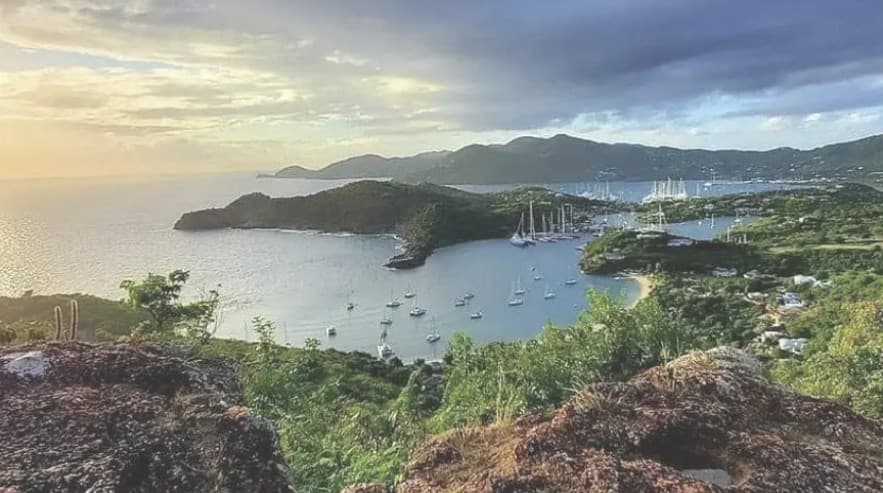
A practical guide for Americans seriously considering relocating to Antigua. Covers residency paths, monthly costs, the best neighbourhoods, healthcare, banking, shipping, and internet.
Moving to Antigua from the US: A Practical 2026 Guide
TL;DR: Americans enter Antigua visa-free for up to 90 days. For longer stays, the Permanent Tax Residency programme requires US$100,000 annual income and a flat US$20,000 annual tax payment. Citizenship by Investment starts at US$230,000. The cost of living runs roughly 18% cheaper than New York City. Healthcare, high-speed internet, and English are all functional for expat life. US citizens still owe the IRS on worldwide income wherever they live.
Moving to Antigua from the US is more achievable than most people think. And more complicated than most relocation guides admit.
The island has a lot going for it. English is the official language. Direct flights connect V.C. Bird International Airport to New York, Miami, and Atlanta. There is no personal income tax, no capital gains tax, and no inheritance tax. The legal system is rooted in British common law. And the island has 365 beaches, one for every day of the year, with warm water and trade winds that make outdoor life genuinely good.
What the glossy guides skip: the import duties are steep, the healthcare system has real limits, banking as a foreign national takes paperwork, and the US tax code follows Americans everywhere on the planet.
This guide covers all of it honestly. Residency options, monthly costs, the best areas to live, healthcare access, banking, shipping, and connectivity. Written for the American professional or retiree who is seriously comparing options, not just dreaming.
Browse the full range of Antigua's parishes and communities on AntiguaSearch to start building a picture of where life on the island actually happens.
Why Americans Are Moving to Antigua Right Now
Antigua is one of the most accessible relocations a US citizen can make. No language barrier. No visa required to visit. No tax on income, dividends, or capital gains for residents. Flights from JFK take under four hours.
The island's expat community has grown steadily over the past decade, driven by a combination of remote work flexibility and genuine lifestyle appeal. Chestertons Antigua estimates that over 10,000 Americans are now actively considering or pursuing Antiguan residency. Social clubs, sailing groups, and marina communities give new arrivals a ready-made social network.
The tax environment is the headline draw. Antigua abolished personal income tax entirely in April 2016. Residents pay no tax on salary, investment returns, or wealth. Government revenue comes primarily from a 15% Antigua and Barbuda Sales Tax (ABST) on goods and services, customs duties, and property tax. For high-earning Americans frustrated by federal and state income tax, the contrast is stark.
Political stability matters too. Antigua and Barbuda is a functioning parliamentary democracy with strong property rights and a consistent rule of law. Crime rates are low compared to regional averages, and expats consistently rate personal safety as high, particularly in the established expat areas of Jolly Harbour and English Harbour.
Connectivity is a genuine selling point. Direct flights link the island to New York, Miami, Atlanta, Toronto, and London. For anyone maintaining US business relationships or visiting family regularly, that matters.
What Are Your Residency Options as an American?
Americans can visit Antigua visa-free for up to 90 days on a standard arrival stamp, with the option to extend to a maximum of six months. For longer stays, the main legal routes are the Permanent Tax Residency programme, the Nomad Digital Residence visa (verify current status before applying), or Citizenship by Investment. Each has different income, investment, and time requirements.
90-Day Visitor Entry
US citizens enter Antigua without a visa. You'll need a valid passport (at least six months' validity), a return or onward ticket, and proof of sufficient funds. Most US citizens receive 90 days on arrival, with possible extension up to six months. This status does not permit local employment, makes long-term leases complicated, and complicates school enrollment for children.
Nomad Digital Residence (NDR) Visa: Verify Status Before Applying
The Nomad Digital Residence programme was designed for remote workers earning at least US$50,000 per year from sources outside Antigua. The two-year permit cost US$1,500 for a single applicant, with an additional US$650 per dependent beyond three. Children had to attend private school only.
One source has reported the programme stopped accepting new applications as of 15 November 2025. The official government portal at nomad.gov.ag should be your first stop to confirm current status before applying. Existing holders' visas continue to their original two-year expiry.
Permanent Tax Residency
This is the route for retirees and established professionals planning a long-term move. The programme requires a minimum annual income of US$100,000 and a flat annual tax payment of US$20,000, regardless of actual earnings. You must maintain a permanent address in Antigua and spend a minimum of 30 days per year on-island.
The benefits are significant: permanent residency status, a Tax Identification Number, and legal protection as a resident. No employment on the island is permitted without a separate work permit.
Citizenship by Investment (CIP)
Antigua's CIP allows full citizenship through a US$230,000 non-refundable contribution to the National Development Fund, or through US$300,000 or more invested in government-approved real estate. Processing takes three to six months. Approvals come with an Antiguan passport.
One critical warning for Americans considering CIP purely for the passport: US President Trump's Proclamation 10998, signed December 2025, suspended US visitor, student, and immigrant visas for Antiguan nationals, citing the country's citizenship-by-investment programme. That includes CIP passport holders. An Antiguan passport is not currently a route to US visitor access. Read the US State Department's guidance before making any CIP investment decision.
The US Tax Reality
No matter which path you choose, one thing does not change: the IRS taxes US citizens on their worldwide income. Living in a country with no income tax does not eliminate your US tax obligation. The Foreign Earned Income Exclusion allows eligible Americans to exclude up to approximately US$132,900 of foreign-earned income for tax year 2026. You'll still need to file. FBAR and FATCA reporting applies to foreign bank accounts. Budget for a qualified cross-border tax professional before you move.
If you're relocating with children, read our complete schools guide for Antigua to understand the private school requirement and student permit process.
What Does It Actually Cost to Live in Antigua?
The cost of living in Antigua runs about 18% cheaper than New York City on the global cost-of-living index. A single person living modestly should budget US$1,850 to US$2,780 per month. A couple needs US$3,890 to US$6,300 per month. A family of four with private school children can reach US$10,000 per month or more once school fees, healthcare, and utilities are added in.
Here is the breakdown that matters:
Rent: A two-bedroom apartment in St. John's runs US$800 to US$1,200 per month. The same size property in Jolly Harbour or English Harbour starts at US$1,500 and can reach US$2,500 or more for waterfront with amenities. Premium areas with pools and resort access command US$3,000 to US$5,000 for luxury villas. Landlords typically require one to three months' rent upfront as a deposit.
Utilities: Basic utilities for an 85m² home including electricity, cooling, water, and garbage collection average US$299 per month. Electricity is the dominant cost. Caribbean electricity runs expensive. If you're in a property that relies heavily on air conditioning, budget toward the top of that range. Homes with cross-ventilation near the coast can often live with ceiling fans most of the year.
Internet: Monthly broadband runs approximately US$70 to US$85. Three providers compete: APUA, Flow, and Digicel. Coverage and speeds vary by location; more on this below.
Groceries: Local produce, fresh fish, and Caribbean staples are good value. Imported US brands cost considerably more because of customs duties stacked on top of shipping. Shopping locally and cooking at home can keep a household grocery budget manageable. A household built around imported brands will spend materially more than one that embraces local alternatives.
Import Duties: This is where many Americans get a shock. All goods entering Antigua face a stack of charges: import duties of 20% to 25% on most consumer goods, a 17% Antigua and Barbuda Sales Tax, a 10% Revenue Recovery Charge, and a 6% to 10% Customs Service Charge. That stack can easily reach 50% to 60% of an item's value. Buying appliances locally, or accounting for duties in your shipping budget, is not optional planning.
Transport: Antigua drives on the left. Most US vehicles are compatible with local roads. You'll need an Antiguan driver's licence, obtained by presenting your US licence. Most expats own a car. Public minibuses exist but run on inconsistent schedules.
Business owners in Antigua: if your real estate agency, healthcare clinic, legal firm, or logistics service works with relocating Americans, add your listing to AntiguaSearch and reach thousands of people in active research mode every month.
Which Neighbourhood Should You Choose?
For families and remote workers who want amenities close by, Jolly Harbour on the west coast is the most popular choice among American expats. English Harbour suits sailing enthusiasts and luxury buyers. St. John's works best for urban convenience and access to services. Dickenson Bay is ideal for a resort-adjacent first base while you get your bearings.
Here is how the main areas compare:
St. John's (St. John's Parish)
The capital is where most of the island's services are concentrated: the main hospital, the best-stocked supermarkets, the government offices you'll need for residency paperwork, and the widest range of restaurants and shops. Schools, healthcare centres, and banks are all accessible without a car. Traffic congests during peak hours and the beach access is not on your doorstep, but for anyone who values walkability over waterfront, St. John's makes practical sense.
Browse all services and businesses in St. John's parish on AntiguaSearch.
Jolly Harbour (St. Mary Parish)
Jolly Harbour is Antigua's largest man-made marina, set on the west coast about 20 minutes from the capital. It's a self-contained gated community with a supermarket, restaurants and bars, a golf course, tennis courts, and direct access to Jolly Beach, Ffryes Beach, and Darkwood Beach. The waterfront villa rental market is active, and properties here include both marina-front apartments and larger beachfront homes. This area is especially popular with yacht crew, families, and remote workers who want structure and community in a resort-style setting without resort prices.
Villas in Jolly Harbour are typically more affordable than English Harbour or the luxury resort corridor to the north. Rental agreements at Jolly Harbour often include access to communal pools, sports courts, and marina facilities.
Explore listings in St. Mary parish on AntiguaSearch.
English Harbour and Falmouth Harbour (St. Paul Parish)
English Harbour is Antigua's most prestigious address. It sits on the south coast, home to Nelson's Dockyard, the only continuously working Georgian naval dockyard in the world and a UNESCO World Heritage Site. The marina is internationally recognised by the sailing community. Fine dining, boutique shops, and Shirley Heights sunsets make this area feel genuinely cosmopolitan. Property prices reflect the status: waterfront villas and hillside homes here command a premium. For luxury buyers and anyone with a passion for sailing, it's hard to beat.
Explore St. Paul parish on AntiguaSearch for English Harbour listings and services.
Dickenson Bay
About 15 minutes from the airport on the north coast, Dickenson Bay is Antigua's most established resort corridor. It's protected by a coral reef, which keeps the water calm and clear, making it excellent for families with young children. The convenience is high and the beach is genuinely beautiful. It's better for a first few months while you find your feet than as a long-term base, unless you specifically want resort-adjacent living.
A note for buyers: Foreign nationals purchasing property in Antigua must obtain an Alien Landholding Licence, which adds approximately 7% to the transaction cost. Work with a local solicitor from the outset.
Browse all real estate listings in Antigua on AntiguaSearch to compare properties by parish and price range.
How Does Healthcare Work for American Expats?
Antigua has one main hospital: Sir Lester Bird Medical Centre (formerly Mount St. John's Medical Centre), a 185-bed facility in St. John's. Private clinics handle routine care well and waiting times are short. International health insurance, including medical evacuation cover, is non-negotiable for any American moving here. For complex specialist procedures, plan to travel to Barbados or the US.
Sir Lester Bird Medical Centre serves as the nation's main referral hospital, offering emergency care, surgery, a neonatal unit, and a range of specialist services. The facility was redeveloped between 2005 and 2009 and is accredited by the Caribbean Medical Council Association. A hyperbaric treatment facility was activated in December 2025. Twenty-five public health clinics operate island-wide, each within three kilometres of a major settlement.
For everyday care, private clinics in St. John's are the preferred option for most expats. Bowen Medical in St. John's charges around EC$250 (approximately US$93) for a new-patient consultation. Dental and optical care is available locally and is generally good for routine work. Bring a 90-day supply of any prescription medications when you first arrive. The island has a National Drug Formulary of around 360 generic drugs, but specialist medications may not be available.
For anything complex, including advanced oncology, neurology, or cardiac intervention, the practical advice from long-term expats is consistent: plan for medical travel. Barbados (45 minutes by air) has the Queen Elizabeth Hospital, one of the Caribbean's best-equipped facilities with 600 beds. The US is under four hours away from V.C. Bird International.
International health insurance is essential. The public Medical Benefits Scheme does not extend to most foreign visa holders. Recommended providers include Cigna Global, Bupa Global, AXA, and Allianz. All plans should include medical evacuation cover. Without it, a serious emergency requiring air transport to a US hospital could cost tens of thousands of dollars out of pocket.
Browse health and medical services across Antigua on AntiguaSearch for clinics, pharmacies, and specialist practitioners.
What Should You Bring, and What Should You Leave Behind?
A 20ft container from the US to Antigua costs US$2,000 to US$4,000 in freight alone, before customs duties. Import duties can stack to 50% or more of an item's value. The smart strategy: ship irreplaceables and hard-to-find specialist items, sell or donate everything else, and use a Miami-based forwarder like OEC Antigua for ongoing US purchases once you've arrived.
Here is the duty stack that applies to most consumer goods entering Antigua: import duty of 20% to 25%, plus 17% ABST, plus a 10% Revenue Recovery Charge, plus 6% to 10% Customs Service Charge. All duties are calculated on the CIF value: cost of goods, insurance, and freight combined. There is no de minimis threshold below which goods are exempt.
For a full household container, a 20ft shipment runs US$2,000 to US$4,000 in freight and a 40ft runs US$3,500 to US$6,000. Transit from US ports takes two to five weeks. Miami is Antigua's main US freight gateway. LCL (Less than Container Load) consolidation from Miami is an efficient option for smaller shipments, with transit of about four to five days port to port.
What is worth shipping: Clothing (duty tends to be lower), specialist equipment not available locally, sentimental items and irreplaceable documents, and tools or professional gear that would be expensive or impossible to source on-island.
What is better bought locally or skipped: Large appliances, furniture (decent local market), US pantry brands (the duty makes them expensive), and anything that will be damaged by salt air and humidity that you don't have a plan to protect.
For ongoing purchases after you arrive: OEC Antigua gives residents a Miami address to shop from Amazon, Walmart, Home Depot, and hundreds of other US retailers. Sea cargo ships every Tuesday at XCD $6 per pound for small packages, with a five-day port-to-port transit. Air cargo runs XCD $10 per pound with Tuesday arrivals. Customs duty and 15% ABST still apply to all imports. Read our OEC Antigua package forwarding guide for a full breakdown of rates and the registration process.
Pets: Bringing pets to Antigua is possible. You must obtain an import permit from the Chief Veterinary Officer before arrival. Start this process three to four months before your move date. Required documentation includes vaccination records and a health certificate from a licensed US veterinarian.
Internet, Banking, and Daily Logistics
Internet and Connectivity
Antigua's connectivity has improved significantly over the past five years and is now a genuine selling point for remote workers. Three providers serve the island: APUA (the national utility), Flow, and Digicel. All three offer fibre and 4G LTE mobile services.
Fibre-to-the-home delivers 100 to 200+ Mbps in St. John's, Jolly Harbour, and English Harbour, the three areas most populated by expats and remote workers. The national median fixed broadband speed was approximately 39 Mbps in early 2025, rising by 18% in the twelve months to January 2025. Older DSL connections in rural properties can be considerably slower.
Starlink is now operational in Antigua. For the period July 2025 to June 2026, Starlink recorded an average download speed of 68 Mbps, making it the fastest broadband provider on the island and the strongest option for rural areas, Barbuda, and offshore vessels. Confirm current service and equipment availability at starlink.com.
A further upgrade is on the way. The CELIA (Caribbean Elite Alliance) submarine cable project will connect Antigua to Boca Raton, Florida and several neighbouring islands via a 3,700 km fibre system. The cable is expected to be fully operational by late 2027.
Monthly broadband costs approximately US$70 to US$85. Both Digicel and Flow SIM cards are available at V.C. Bird International Airport on arrival, so you can get connected before you leave the terminal.
Banking
Five main banks now serve Antigua and Barbuda following the exits of RBC and Scotiabank in 2021: ACB Caribbean (the island's oldest and largest indigenous bank), Eastern Caribbean Amalgamated Bank (ECAB, which absorbed Scotiabank's operations), CIBC Caribbean, Caribbean Union Bank, and Global Bank of Commerce.
The Eastern Caribbean Dollar is pegged to the US dollar at XCD 2.70 to US$1. That peg has held for decades. US dollars are widely accepted in tourist areas, hotels, and restaurants. You can live comfortably without exchanging currency for the first few weeks, but a local bank account makes renting property, paying utilities, and managing daily expenses significantly easier.
Opening a bank account: Foreign nationals can open accounts in Antigua, but the process is document-intensive. Required documents typically include a valid passport, a second government-issued ID, proof of address issued within the past three months (utility bill or tenancy agreement), a letter from an employer or source-of-funds documentation for the self-employed, and two reference letters from an existing bank or recognised professional. Some banks support remote account opening, though this tends to take longer.
US citizens and compliance: US citizens must comply with FATCA and FBAR regardless of where they bank. Antiguan banks are required to collect the information needed to report to US authorities. This is routine, not a barrier, but it means you'll be asked to complete additional forms at account opening. Wise and Revolut work well as a bridge until your local account is established.
For a full comparison of branches, ATMs, hours, and account types, read our complete banking guide for Antigua. For insurance, legal services, and financial professionals on the island, browse finance and legal listings on AntiguaSearch.
Conclusion
Moving to Antigua from the US is a real option in 2026, not a retirement fantasy. The island has genuine infrastructure: reliable English, direct flights, functioning banks, private schools, and internet fast enough to run a remote career without compromise.
Three honest takeaways before you book that recce trip:
One: The tax environment is real, but so is the IRS. Antigua's zero income tax is not a loophole for US citizens. You still file, still pay on worldwide income, and still report foreign accounts. Budget for a qualified cross-border accountant from day one.
Two: Lifestyle costs more than the headline numbers suggest. Import duties are steep. Utilities run high. Healthcare insurance is non-negotiable. The island is cheaper than New York or Miami in headline terms, but it is not cheap. Plan your budget around EC$10,000 to EC$17,000 per month as a comfortable couple, and adjust from there.
Three: Where you live defines your Antiguan experience. Jolly Harbour is not English Harbour. St. John's is not Dickenson Bay. Each area has a genuinely different daily reality. Visit all of them before you sign a lease.
Explore current real estate listings across Antigua on AntiguaSearch to compare properties by parish, price, and style. Whether you're renting first or buying straight in, AntiguaSearch is the fastest way to see what's available across all six parishes from wherever you are right now.
Frequently Asked Questions
Can US citizens live in Antigua without applying for residency?
Americans can enter Antigua visa-free and stay for up to 90 days on a standard arrival stamp, with a possible extension to a maximum of six months. Beyond six months, you legally need a residency permit or another qualifying visa. Overstaying your visitor authorisation can complicate future residency applications. If you plan to stay long-term, start the Permanent Tax Residency application process before your visitor period expires.
Do I still have to pay US taxes if I move to Antigua?
Yes. The US taxes its citizens on worldwide income regardless of where they live. Moving to a country with no personal income tax does not replace your US federal tax obligation. The Foreign Earned Income Exclusion for 2026 allows eligible Americans to exclude approximately US$132,900 of foreign-earned income, which reduces but rarely eliminates the US tax bill entirely. You must also file FBAR reports if your foreign financial accounts exceed US$10,000 at any point in the year. Engage a cross-border tax professional before you relocate, not after.
What is the realistic monthly budget for an American living in Antigua?
A single person living modestly should budget US$1,850 to US$2,780 per month, including rent, utilities, groceries, transport, and health insurance. A comfortable couple should plan for US$3,890 to US$6,300 per month. A family of four with children in private school can reach US$10,000 per month or more once school fees, healthcare, utilities, and a car are included. Import duties on US goods add a persistent premium to any lifestyle built around American brands. Shopping locally cuts costs significantly.
Is healthcare in Antigua adequate for an American retiree?
For routine and urgent care, yes. Private clinics in St. John's offer short wait times and competent general practitioners at reasonable rates. The Sir Lester Bird Medical Centre handles emergencies and a solid range of specialist services. For complex conditions requiring advanced oncology, cardiac surgery, or specialist neurology, medical travel to Barbados (45 minutes by air) or the US is the realistic plan. Any American relocating to Antigua should have comprehensive international health insurance with medical evacuation coverage in place before they arrive.
What is the best area in Antigua for American expats?
It depends on your lifestyle. Jolly Harbour is the most popular choice for American families and remote workers: it's a gated marina community with amenities, west-coast beaches, and a strong expat social scene. English Harbour suits luxury buyers, sailing enthusiasts, and anyone who wants a UNESCO heritage backdrop and fine dining on their doorstep. St. John's is the right call if you prioritise proximity to hospitals, schools, and urban services. Dickenson Bay is a practical first base near the airport while you explore the island and decide where you actually want to settle.